


Revenue management in hospitality is the backbone of a hotel's financial strategy. By using data-driven insights, hoteliers can make informed decisions on pricing, inventory, and distribution. This enables them to increase revenue without compromising guest satisfaction. In this guide, we will define what revenue management is, explore its importance in the hospitality industry, and discuss how modern technology is revolutionizing this practice.
Key Takeaways:
- Revenue management is crucial for a hotel’s profitability, focusing on pricing strategies and effective distribution. By using data, hoteliers can adjust rates to match market conditions and maximize earnings.
- Important metrics like RevPAR (Revenue per Available Room), ADR (Average Daily Rate), and Occupancy Rate help determine how well the hotel is performing. GOPPAR (Gross Operating Profit per Available Room) gives a broader perspective on profitability, factoring in operational costs.
- With automated revenue management, hotels can respond faster to demand fluctuations. AI-powered tools provide real-time insights into market trends, allowing dynamic pricing adjustments and more accurate forecasts.
- Cloud-based solutions are reshaping the industry, offering the flexibility to manage hotel pricing across multiple platforms in real-time—helping hoteliers stay competitive.
- Tools like Hotelogix's integrated RMS simplify revenue management. By automating key tasks like pricing adjustments and forecasting, they help hoteliers optimize profitability and improve operational efficiency.
What is Revenue Management in Hospitality?
Revenue management in hospitality refers to the strategic use of pricing and distribution methods to maximize revenue. Hoteliers apply sophisticated tools and techniques to forecast demand, set competitive pricing, and optimize inventory. The aim is to sell the right room, to the right customer, at the right price, at the right time.
Revenue Management Hotel Definition
In hotel terms, revenue management involves forecasting demand, adjusting prices in real-time, and optimizing the distribution channels to maximize the revenue per room (RevPAR). This practice is crucial because it allows hotels to adapt to fluctuating market conditions, whether due to seasonality, local events, or competition.
For hoteliers, the primary goal is to align supply with demand while ensuring a balance between occupancy and profitability. Pricing is adjusted dynamically based on factors like guest preferences, booking lead times, and competitor rates.
Key Metrics in Hotel Revenue Management
Why Revenue Management is Crucial for the Hospitality Industry
In the highly competitive hospitality industry, revenue management is vital for ensuring that hotels can stay profitable even during off-peak periods. Without effective revenue management, hoteliers risk either overpricing rooms, leading to poor occupancy rates, or underpricing, missing out on potential revenue.
- Forecasting demand: Accurate demand forecasting allows hotels to adjust pricing strategies accordingly.
- Maximizing revenue: By adjusting prices dynamically, hotels can charge premium rates during peak times while offering discounts during slower periods.
- Optimizing distribution: Effective revenue management ensures that rooms are sold on the most profitable channels, such as direct bookings, OTAs (Online Travel Agents), and GDS connect (Global Distribution Systems).
How Automated Revenue Management Services Are Revolutionizing Hospitality
In the past, revenue management required manual processes, often involving complex spreadsheets and outdated data. Today, automated revenue management services, powered by AI, allow hotels to dynamically adjust pricing based on real-time data, including competitor rates, market trends, and guest behavior.
Automated systems reduce human error and increase the speed of decision-making, ensuring that pricing strategies are always optimized. Real-time OTA management has also made it easier for hotels to access these tools from anywhere, allowing for better flexibility and responsiveness.
Key Revenue Management Software for Hotels
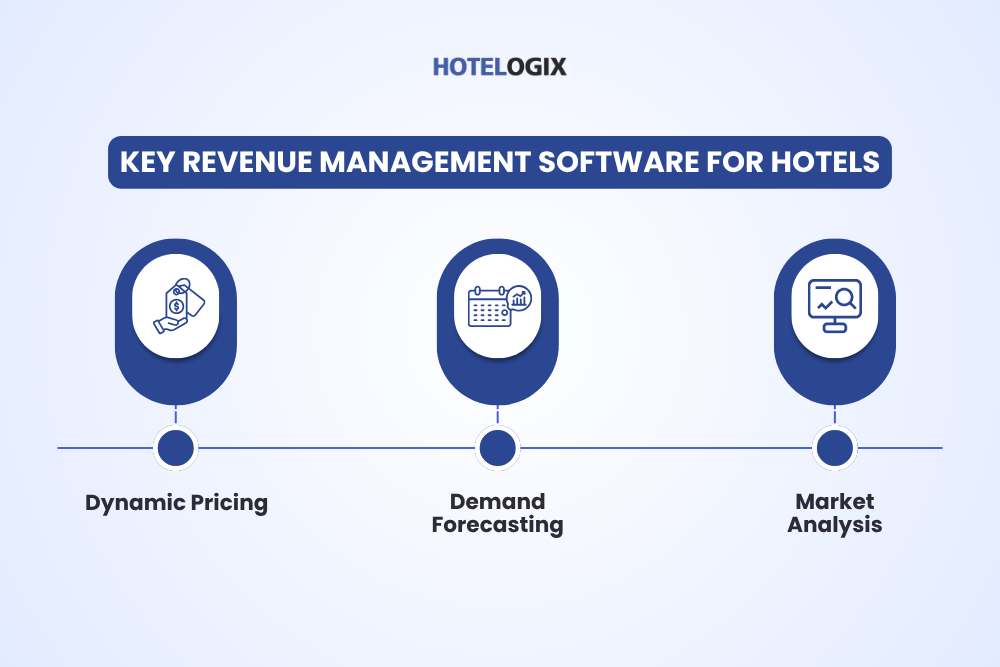
Choosing the right hotel revenue management software can make a significant difference in your hotel's profitability. These platforms offer several key features:
- Dynamic Pricing: Automated tools adjust pricing based on occupancy, demand, and market trends.
- Demand Forecasting: Accurate forecasting ensures the hotel optimizes pricing during peak demand periods.
- Market Analysis: Integrated tools allow hoteliers to analyze competitor pricing and adjust strategies accordingly.
Top Features in Hotel Revenue Management Software
Advanced Hotel Revenue Management Solutions

With the evolution of technology, advanced hotel revenue management solutions have become more sophisticated. These solutions integrate with property management systems (PMS) and booking engines to allow seamless rate adjustments across all platforms.
One major benefit of these advanced solutions is their ability to predict demand fluctuations more accurately. They also help hotels maximize profitability by managing distribution across various channels (OTAs, direct bookings, etc.), ensuring the best rate and availability are presented to guests across platforms. Web booking engine integration further streamlines the booking process, providing guests with real-time availability and dynamic pricing directly on the hotel's website.
Hotelogix's Role in Streamlining Revenue Management
Hotelogix’s cloud-based platform ensures that hoteliers have access to real-time data and insights, allowing them to adjust room rates on the fly. Key features such as automated pricing rules, advanced forecasting, and integrated PMS make it easier for hoteliers to implement a data-driven approach to revenue management. This reduces manual errors, increases operational efficiency, and ensures optimal pricing strategies across channels, ultimately boosting the hotel's bottom line
The Role of AI in Hotel Revenue Management

Artificial intelligence is making significant strides in the hospitality industry. For revenue management, AI can process vast amounts of data, providing hoteliers with deeper insights into customer preferences, booking behavior, and market trends. AI-based platforms help optimize rates and pricing models more efficiently by analyzing:
- Customer segmentation: AI helps understand different customer profiles and tailor pricing strategies accordingly.
- Real-time price adjustments: AI systems continuously adjust prices based on real-time data, enabling hotels to stay competitive.
- Long-term forecasting: AI also helps forecast demand over longer periods, allowing for better resource allocation and planning.
Revenue Management in the Hotel Industry: Key Metrics and Reports
In the hotel industry, monitoring key metrics is essential for evaluating the effectiveness of revenue management strategies. Some of the most important metrics include:
- RevPAR: Measures how well a hotel is utilizing its available rooms.
- ADR: Helps hoteliers understand their average room rate and identify opportunities for pricing improvements.
- Occupancy Rate: Shows how much of the hotel’s capacity is being filled.
- GOPPAR: A key metric for understanding profitability beyond just room rates.
How Key Metrics Impact Revenue Management
Cloud-Based Solutions: The Future of Revenue Management
The shift toward cloud-based revenue management platforms has transformed the way hotels operate. Cloud-based systems offer flexibility, scalability, and real-time access to data. This is particularly beneficial for hotel chains that need to manage multiple properties simultaneously.
By leveraging cloud solutions, hoteliers can:
- Access real-time data from anywhere.
- Ensure rate parity across all channels.
- Quickly respond to market changes.
How to Choose the Right Revenue Management Platform
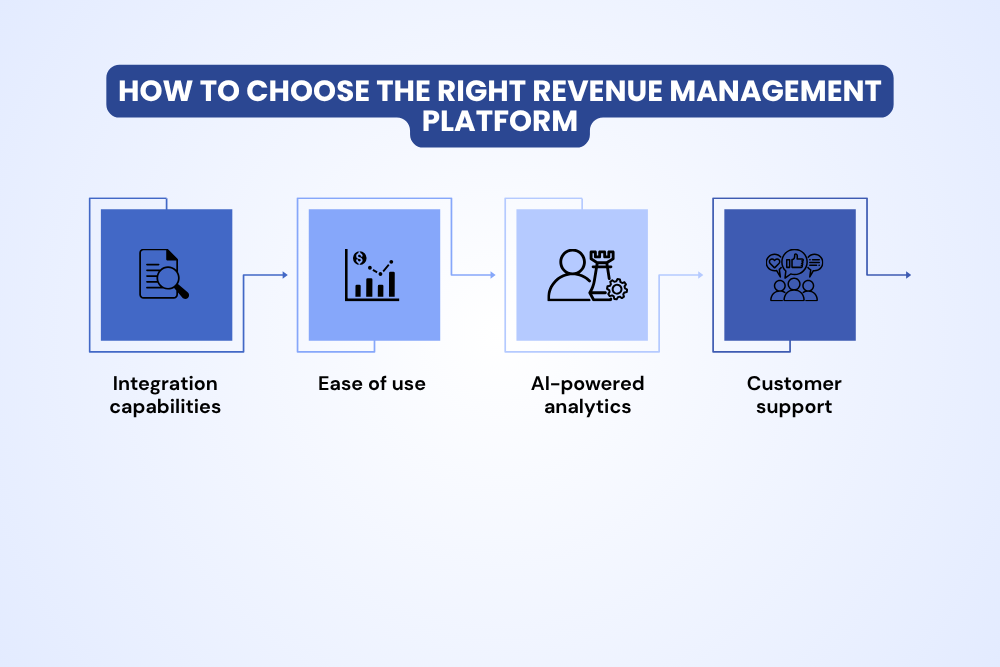
Selecting the right revenue management platform for your hotel depends on several factors:
- Integration capabilities: Ensure the platform integrates smoothly with your PMS, booking engine, and OTAs.
- Ease of use: Choose a platform that is user-friendly and does not require extensive training.
- AI-powered analytics: Look for platforms that offer intelligent forecasting and pricing strategies.
- Customer support: Strong customer support is crucial to resolving issues quickly.
By choosing the right platform, hoteliers can optimize their revenue management strategy and improve profitability.
Conclusion
Revenue management is no longer just a tool for large hotels but a necessity for all hospitality providers looking to thrive in an increasingly competitive market. By leveraging automated solutions, AI, and cloud-based technologies, hoteliers can optimize their pricing strategies, improve forecasting, and maximize revenue. As the hospitality industry continues to evolve, embracing advanced revenue management techniques will be crucial for staying ahead of the competition.