
In today's competitive hospitality landscape, staying ahead means delivering exceptional guest experiences while running your property more efficiently. A smart hotel makes this possible by leveraging integrated technologies such as IoT-enabled room controls, mobile check-in, digital keys, and intelligent automation systems. These solutions not only elevate the guest journey but also streamline operations and increase profitability—a win-win for both guests and hoteliers.
As expectations shift toward convenience, personalization, and contactless service, smart hotel technology offers a future-ready way to meet these demands. In this guide, we explore how smart hotel innovations can transform your operations, enhance the guest experience, and improve your bottom line.
What Is a Smart Hotel?
A smart hotel is a property that integrates modern technology into its operations and guest services. It uses tools like IoT (Internet of Things), artificial intelligence (AI), and automation platforms to provide a seamless and personalized guest experience. From digital room keys to intelligent housekeeping scheduling, smart hotels turn traditional hospitality into a high-tech, efficient, and guest-centric business model.
Smart hotels are not just a trend. They are a strategic investment that:
- Improves operational efficiency
- Reduces overhead costs
- Enhances guest satisfaction and loyalty
- Enables data-driven decision-making
Why Smart Hotels Are Essential for Modern Hospitality
Guests today are accustomed to smart homes, voice assistants, and mobile apps. They expect similar convenience and control when staying at a hotel. The pandemic further accelerated demand for digital and contactless services, making smart technology a necessity rather than a luxury.
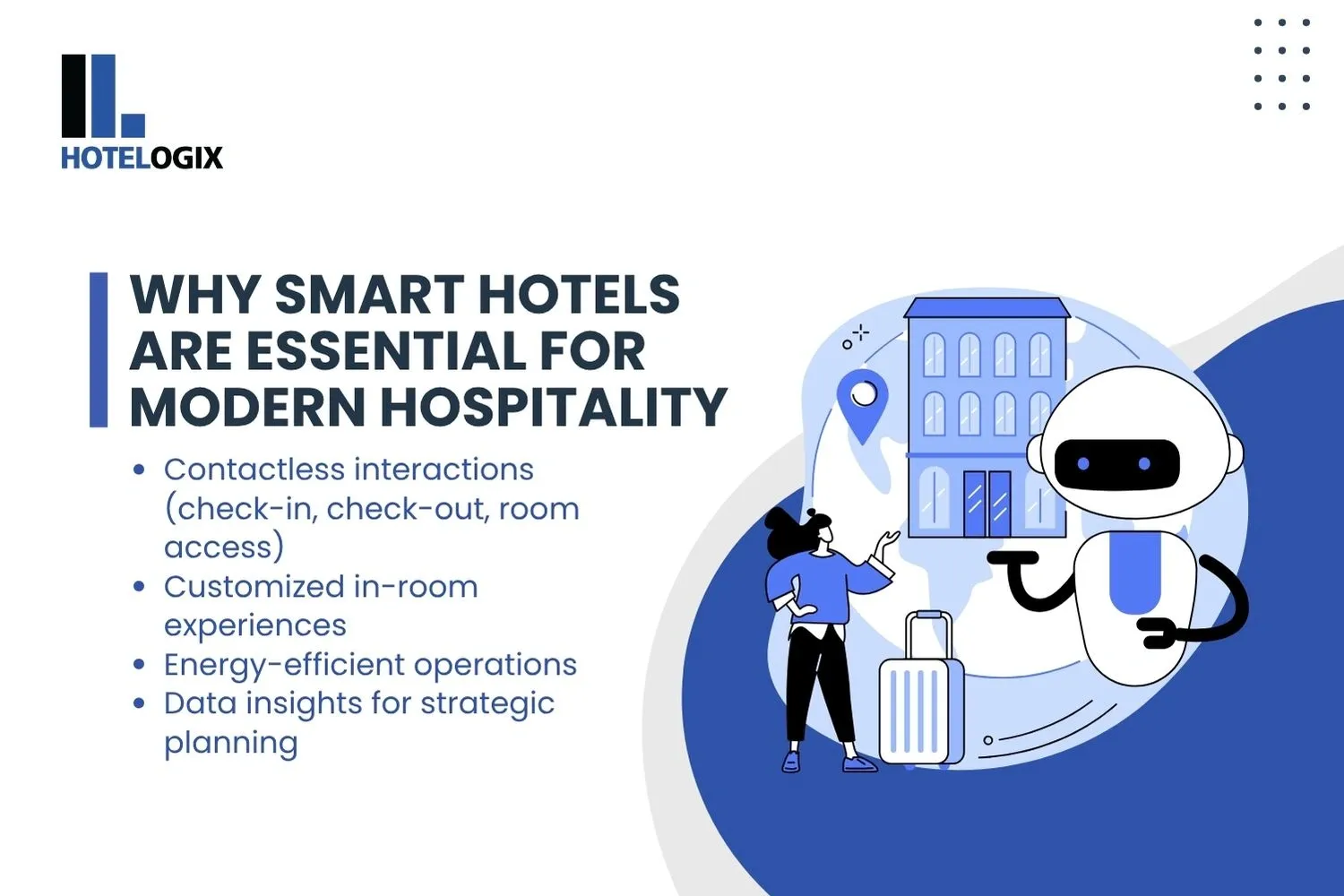
Smart hospitality solutions directly address these evolving expectations:
- Contactless interactions (check-in, check-out, room access)
- Customized in-room experiences
- Energy-efficient operations
- Data insights for strategic planning
The global smart hospitality market is projected to grow from $23.2 billion in 2024 to $29.65 billion in 2025, demonstrating a remarkable compound annual growth rate (CAGR) of 27.8%. Looking further ahead, the market is expected to reach an impressive $74.86 billion by 2029, with a CAGR of 26.1% during the forecast period.
Key Smart Hotel Technologies
Here's a breakdown of popular smart hotel technologies and how they benefit your property:
Benefits for Hoteliers and Guests
Smart hotel technology delivers tangible benefits on both sides of the check-in desk:
For Hoteliers:
- Operational Efficiency: Automate routine tasks, reduce manual errors, and manage with fewer staff.
- Cost Reduction: Smart thermostats and lighting lower utility bills; automated scheduling cuts labor waste.
- Increased Revenue: Upsell opportunities via in-room tablets or apps; data insights for dynamic pricing.
- Guest Loyalty: Higher satisfaction rates lead to positive reviews, repeat stays, and direct bookings.
For Guests:
- Faster Service: Skip the queue with mobile check-in and automated concierge.
- Control & Personalization: Adjust the room to their preferences from their phone.
- Safety & Hygiene: Contactless interactions meet new standards for health-conscious travelers.
Real-World Examples from the Industry
- Hilton Connected Room: Guests control lighting, TV, and temperature through the Hilton Honors app.
- Eccleston Square Hotel, London: Offers smart glass walls, digitally controlled massage beds, and room automation via iPads.
- Hotel Schani, Vienna: Pioneered keyless entry, self-check-in kiosks, and personalized guest profiles.
These hotels have successfully leveraged technology to boost guest satisfaction and increase operational control—proving that smart hotel systems are not exclusive to large chains.
How to Implement Smart Hotel Technology in Phases
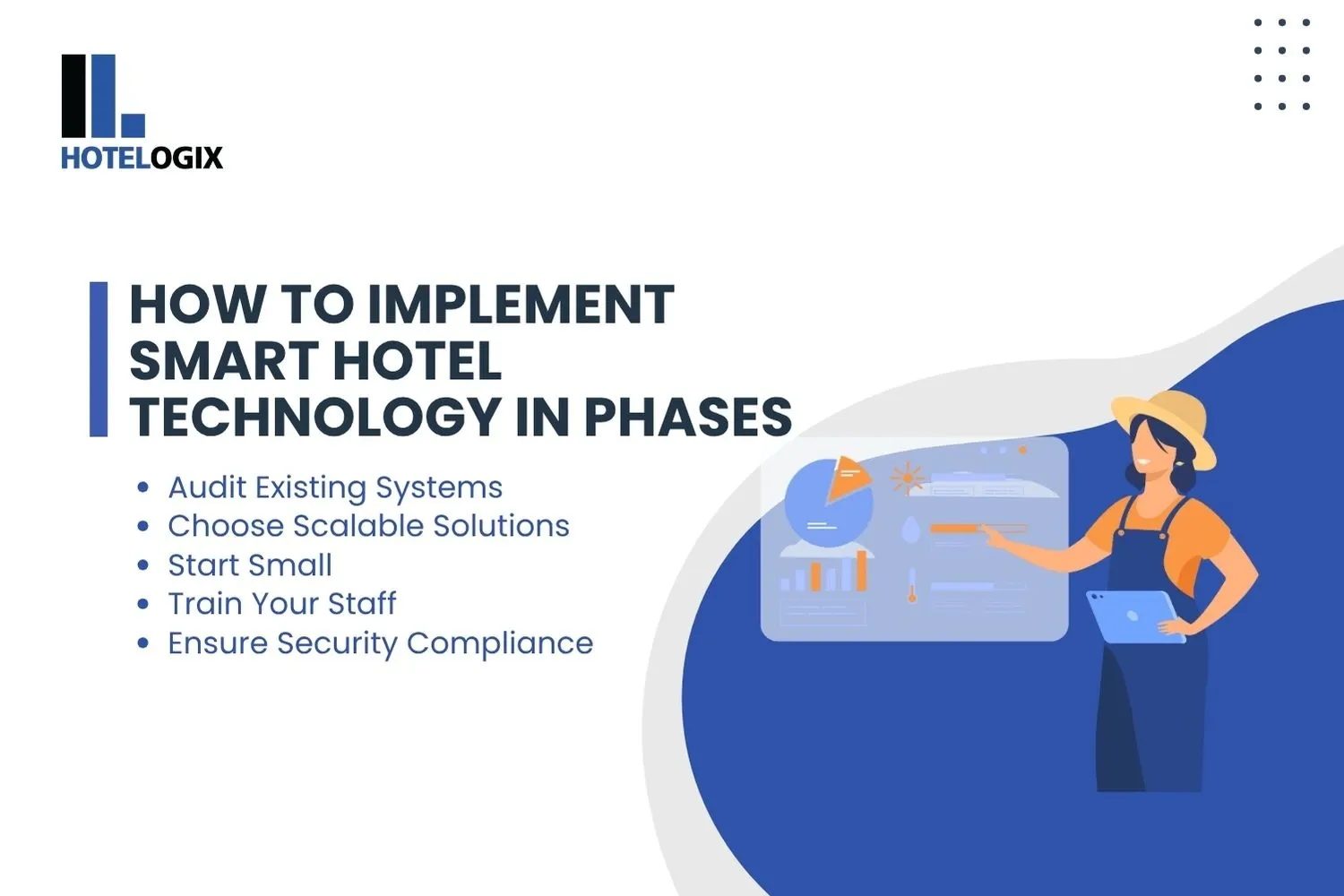
Smart technology doesn't require an all-or-nothing approach. Start with a few core features and scale over time:
- Audit Existing Systems: Identify areas where automation or IoT could improve operations (e.g., check-in delays, energy waste).
- Choose Scalable Solutions: Look for hotel tech providers with modular options that integrate with your PMS.
- Start Small: Introduce mobile check-in or smart room controls in a few rooms to monitor guest feedback and ROI.
- Train Your Staff: Empower your team with the knowledge to support and manage new technologies.
- Ensure Security Compliance: Protect guest data with encryption and meet relevant privacy standards (e.g., GDPR).
A Smart Platform to Support Your Transformation
Its mobile guest self-service portal enables seamless contactless check-in, digital keys, and real-time room updates, reducing front desk workload while elevating guest convenience.
Hotelogix also integrates with IoT systems for energy and housekeeping automation, and works effortlessly with a channel manager and supports real-time OTA management, ensuring up-to-date inventory across all sales platforms.
For multi-location properties, its multi property & CRS support centralizes control, and its integration with a web booking engine helps convert direct website traffic into confirmed reservations.
KPIs to Measure Smart Hotel Success
To evaluate the impact of your smart upgrades, track the following performance indicators:
Current industry data shows that U.S. hotels implementing smart technologies are seeing significant growth, with the overall U.S. hotel market expected to reach USD 395.79 Billion by 2030, rising at a CAGR of 7.10%.
Conclusion: The Future of Hospitality Is Smart
For today’s hotelier, smart hotel technology isn’t just an upgrade—it’s an operational strategy. Whether you run a boutique property or a multi-location chain, adopting tech-driven solutions can dramatically improve service delivery and business efficiency.
Start small, focus on the guest journey, and grow from there. The sooner you invest in smart hospitality, the sooner your property becomes a leader in guest satisfaction and operational excellence.