
Start with Smart Tools: Modernize Group Bookings
Efficient group booking management begins with the right technology. Manual processes often lead to errors and lost revenue—especially when dealing with multiple guests, room types, and event setups.
Hotelogix Group Reservation System
The system automates confirmation emails and guest communication, ensuring nothing slips through the cracks during high-volume booking periods. It also supports tailored packages for corporate, wedding, or social groups, simplifying complex bookings into a streamlined workflow.
According to recent industry data, hotels implementing integrated reservation systems have seen a 23% increase in group booking conversion rates and 18% reduction in administrative workload.
By integrating Hotelogix into your operations, your team can work faster, reduce errors, and deliver a seamless guest experience from inquiry to checkout.
Be Ready for Last-Minute Group Bookings
Shorter booking windows are becoming the norm, with planners often finalizing group stays just days before the event. Hotels must be operationally agile to accommodate these compressed timelines without compromising service quality.
How to Stay Agile
Maintain flexible inventory by holding back a percentage of rooms specifically for group inquiries, allowing you to respond confidently to late requests. This ensures you're not forced to decline high-value business due to lack of availability.
Implement real-time communication channels between departments so updates on availability, cancellations, or changes reach the right teams immediately. Whether it's sales, housekeeping, or F&B, everyone needs access to the latest booking details.
Train your front desk and reservations teams to respond quickly and accurately to group leads, with standard operating procedures for fast turnarounds. Quick response time often makes the difference in securing group business.
Create pre-approved group booking templates with preset terms, pricing, and inclusions to reduce administrative effort and speed up the confirmation process. These templates allow your sales teams to act quickly without waiting on lengthy internal approvals.
Target Smaller and Local Events
While large conventions may be sporadic, there's a steady demand for small and mid-sized group gatherings. Hotels that pivot to cater to this market can secure consistent group revenue throughout the year.
How to Tap This Market
Promote your smaller meeting rooms, boardrooms, and banquet halls as ideal venues for business meetings, workshops, and private events. Highlight flexibility in layout and amenities to appeal to a broader range of planners.
Offer curated packages that bundle accommodations, meals, meeting space, and AV equipment, simplifying the planning process for organizers. These all-in-one packages help drive higher per-group revenue and appeal to budget-conscious clients.
Forge relationships with local businesses, NGOs, universities, and community groups that require regular event hosting. Becoming their preferred hotel partner ensures repeat bookings and positive word-of-mouth in the region.
Equip your hotel to support hybrid events by offering high-speed internet, video conferencing tools, and live-streaming capabilities. This positions your property as a future-ready venue for modern event formats.
Coordinate Every Department Around Group Needs
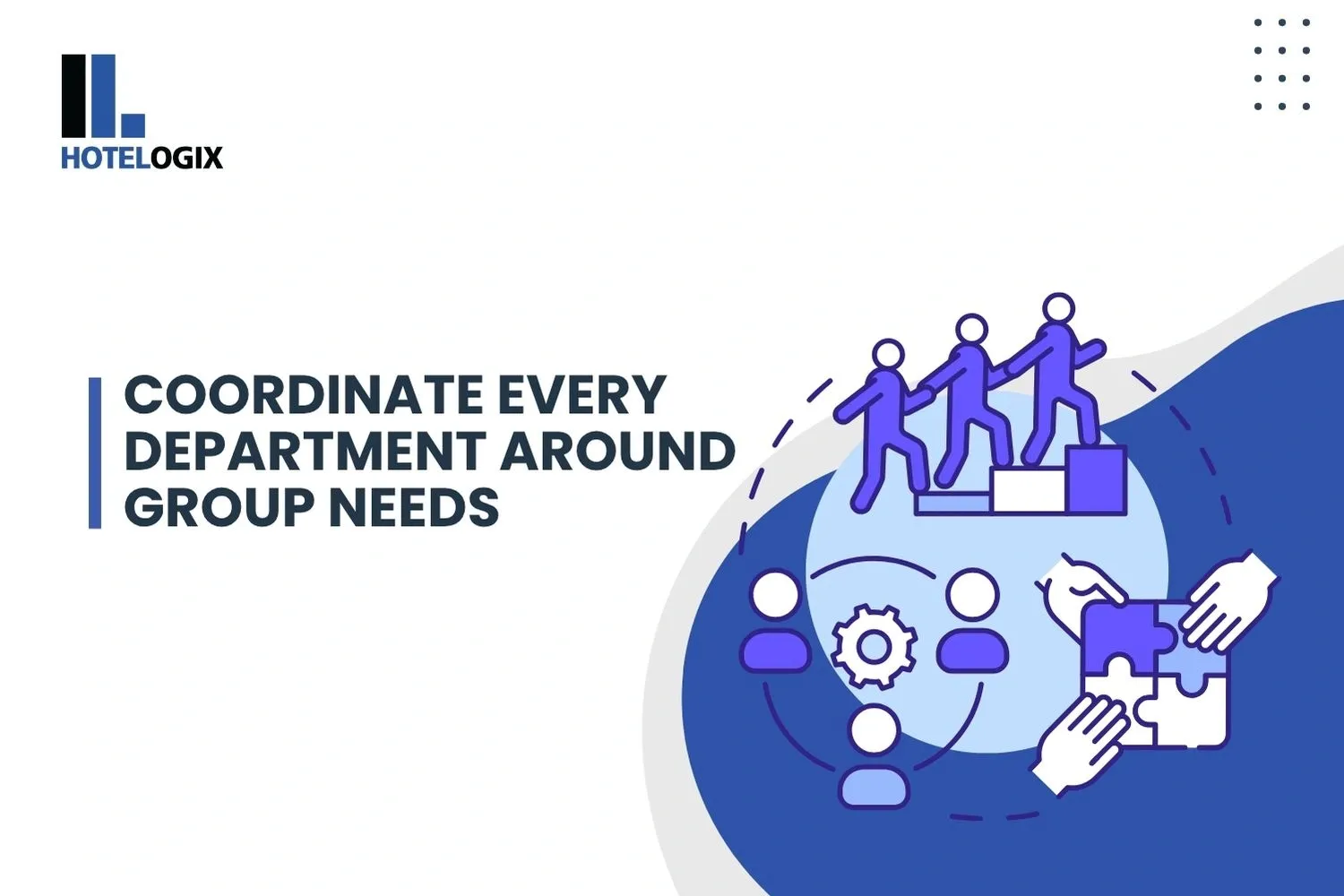
Managing group stays is a multi-departmental effort, and lack of coordination can lead to missed expectations, delays, or negative reviews. Hotels must treat group events as cross-functional operations, not isolated transactions.
Build Cross-Functional Group Workflows
Ensure group booking details are shared with all relevant teams in advance, including check-in times, room preferences, and event agendas. This allows every department to prepare adequately and deliver consistent service.
Keep catering and kitchen staff updated on guest counts, meal timings, and special dietary requests. Real-time communication reduces food waste and ensures smooth execution during F&B services.
Alert housekeeping teams on staggered arrivals and departures for group members so they can manage room readiness accordingly. Staggered schedules reduce last-minute pressure and improve room turnover efficiency.
Align your sales and marketing teams to run campaigns targeting group segments, ensuring both lead generation and conversion are aligned toward the same goals. Joint efforts yield better ROI and stronger market positioning.
Rethink Sales Structures for Group Revenue
The traditional model of property-specific sales teams is giving way to regionalized or centralized structures. Hotels must evolve their sales approach to cover more ground with fewer resources.
Sales Strategy for 2025
Assign regional or cluster sales managers to oversee group sales for multiple properties within a region, enabling better resource utilization. This model allows for consistent strategy execution and broader market coverage.
Equip sales reps with cloud-based CRMs and digital contract tools so they can generate proposals and respond to leads from anywhere. Mobility ensures faster responses and improves conversion rates, especially for time-sensitive inquiries.
Train your team to offer value-added upsells, such as extended stays, spa packages, or exclusive venue access, tailored to the group’s profile. These extras not only boost revenue but enhance the guest experience.
Monitor performance through centralized dashboards that track group bookings, response times, conversion rates, and revenue contribution. Data-driven visibility empowers managers to make informed decisions and adjust strategies quickly.
Why Group Bookings Still Matter
Despite shifts in travel behavior, group bookings remain one of the most profitable segments for hotels. They deliver not only high room volume but also significant ancillary revenue and long-term partnerships.
Now, what if you could turn those last-minute vacancies into an opportunity? With 30% of hotel bookings made last-minute, it is quite evident that the travel audience goes for a killer deal—and this applies to group planners too.
Group stays increase occupancy during shoulder periods, allowing you to stabilize revenue across the week or month. These bookings help balance demand cycles and improve forecasting accuracy.
Events such as weddings, business retreats, and training programs contribute heavily to F&B sales, event rentals, and additional services like spa or airport transfers. A single group can drive revenue across multiple departments.
When managed well, group bookings reduce dependency on OTAs by encouraging direct, repeat relationships with organizations and event planners. This translates to higher margins and customer lifetime value.
Conclusion
Group bookings in 2025 are more than just high-volume reservations—they’re strategic opportunities for long-term revenue and guest loyalty. With tools like Hotelogix’s Group Reservation System, hotels can streamline operations, automate communication, and manage even last-minute bookings with ease. Success lies in aligning departments, maintaining flexible inventory, and offering tailored packages for small and mid-sized events.
By rethinking sales structures and adopting real-time coordination, hotels can unlock higher margins and reduce OTA dependence. When executed well, group bookings drive revenue across rooms, F&B, and event services—positioning your hotel as a preferred partner for planners and organizations all year round.