

As the hospitality industry evolves, so do guest expectations. Today’s travelers want more than comfort—they want efficiency, personalization, and control over their stay. Enter the contactless guest experience: a suite of technologies designed to streamline the guest journey, enhance satisfaction, and improve operational efficiency.
This isn’t just a response to hygiene concerns—it’s a transformation of how hotels deliver service. If you’re a hotelier looking to future-proof your property, this guide will help you understand the what, why, and how of implementing a contactless experience that your guests will love.
What Is a Contactless Guest Experience?
A contactless guest experience enables guests to engage with your hotel using their smartphones or personal devices—limiting or removing the need for physical interactions with staff or shared surfaces. It's an integrated approach that connects mobile check-in, digital keys, IoT in hospitality, digital concierge services, and touchless payments to offer a seamless guest journey from booking to check-out.
Key Components
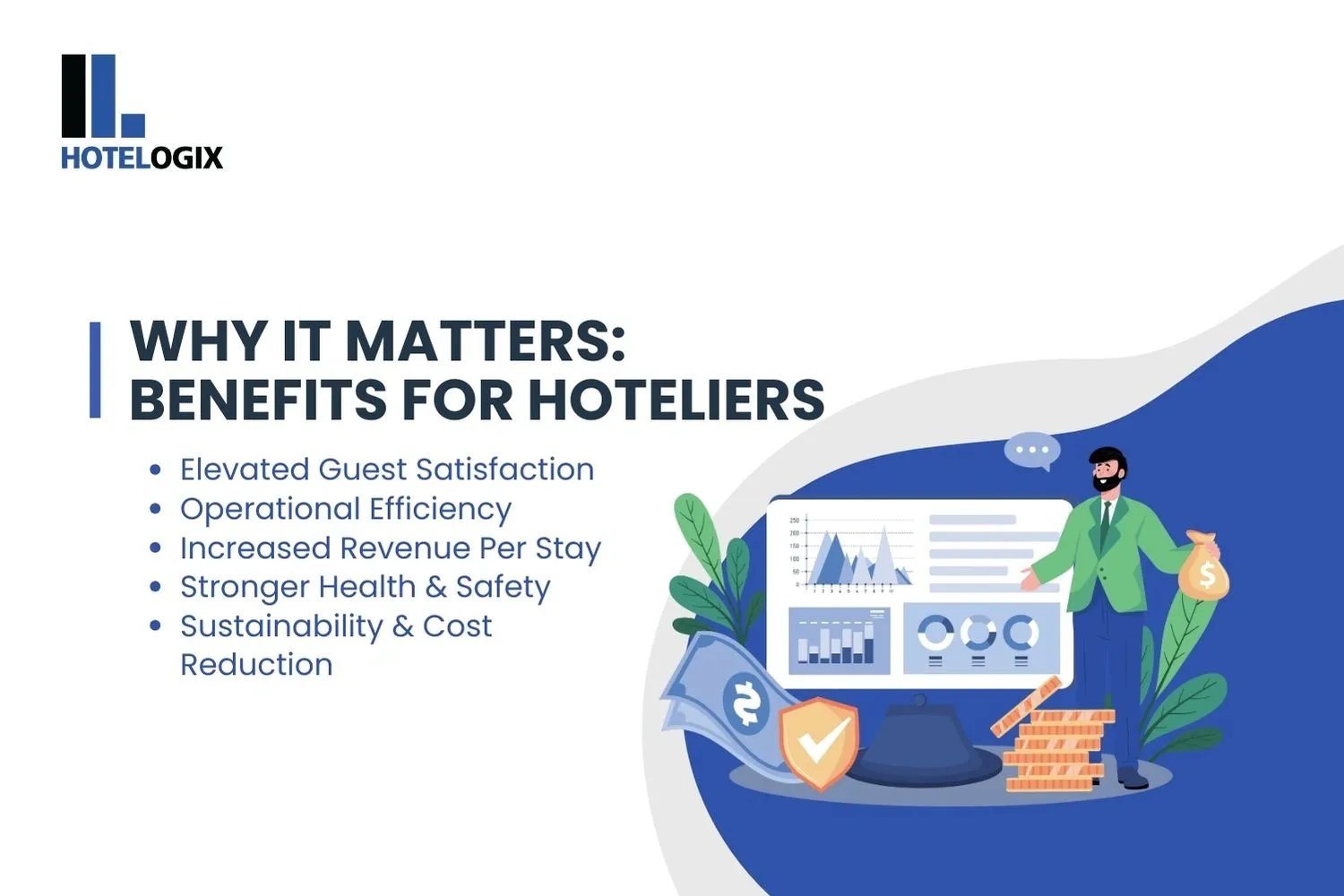
Why It Matters: Benefits for Hoteliers
Technology should work for hoteliers—not just for guests. Here’s why contactless technology is worth the investment:
1. Elevated Guest Satisfaction
Today’s guests want fast, flexible service. Long waits at check-in or miscommunications with staff create friction. With mobile tools and digital keys, guests control their arrival, comfort, and communication—all of which boost satisfaction scores.
“Guests who use mobile check-in are 50% more likely to leave a positive review.” — Mews Research
2. Operational Efficiency
Contactless tools reduce front desk pressure, allowing your staff to focus on guest engagement rather than paperwork. Automated check-in, messaging, and housekeeping requests streamline workflows.
3. Increased Revenue Per Stay
Digital concierge platforms allow targeted promotions (e.g., room upgrades, late checkout, spa bookings) that feel personalized and timely—without needing extra staff.
4. Stronger Health & Safety
Minimizing touchpoints reassures health-conscious travelers and reduces the spread of illness. It’s also key for attracting group or business bookings with stricter travel policies.
5. Sustainability & Cost Reduction
Less printing, plastic, and electricity usage with smart tech contributes to sustainability goals—and reduces your bottom line.
Technology Essentials: What Every Hotel Needs
Let’s break down the core technologies powering a modern contactless hotel:
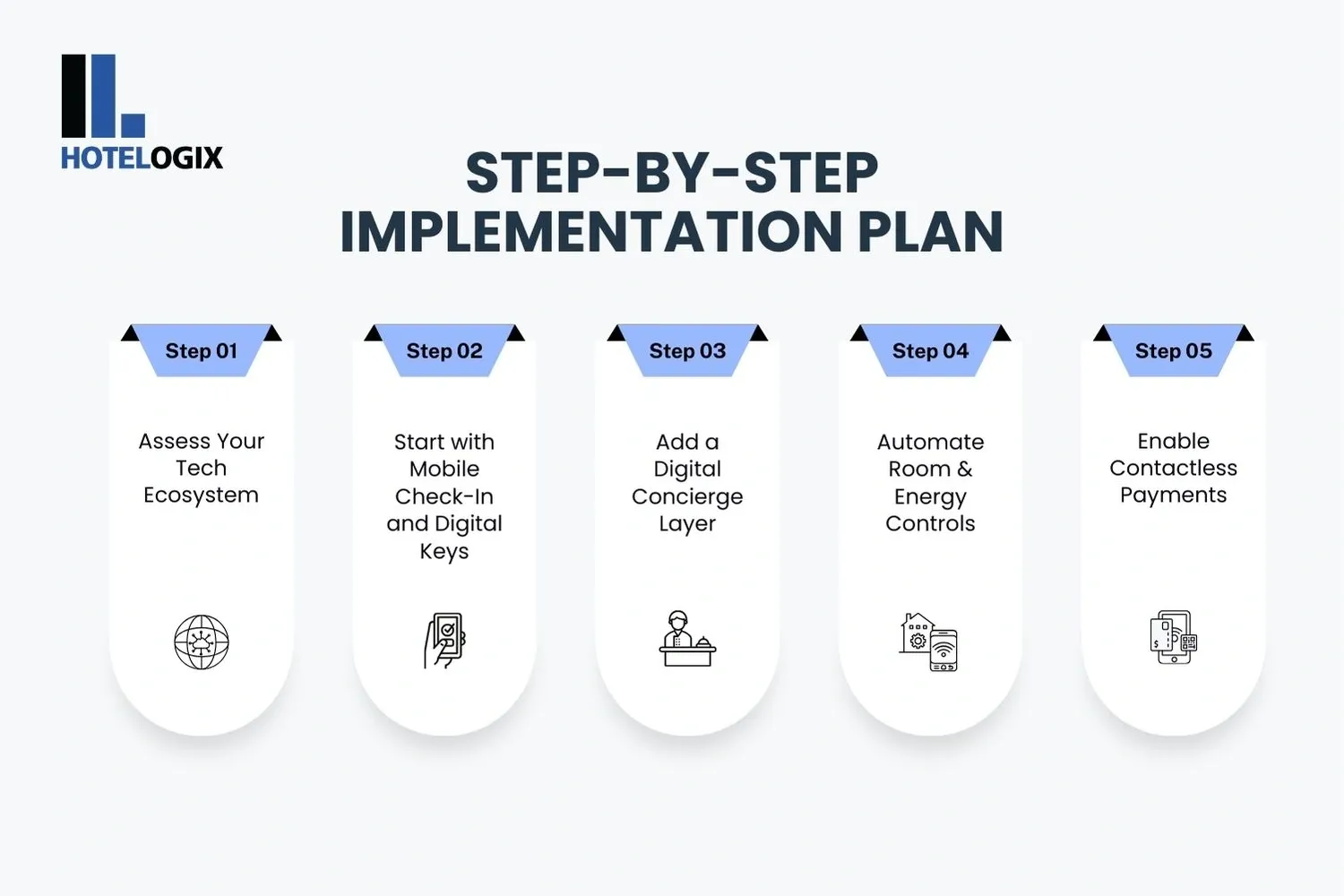
Step-by-Step Implementation Plan
Transitioning to a contactless setup doesn’t have to be overwhelming. Start with a phased approach tailored to your budget and guest profile.
Phase 1: Assess Your Tech Ecosystem
- Conduct a tech audit: Review your PMS, POS, booking engine, and door lock system.
- Identify gaps: Can your systems integrate with mobile check-in and messaging apps?
Phase 2: Start with Mobile Check-In and Digital Keys
- Choose a vendor that integrates with your PMS and door locks.
- Pilot the feature with a set of rooms or one property.
- Offer guests the option during online booking and pre-arrival email through your web booking engine to set expectations early.
Looking for a ready-to-deploy solution?
Whether you run an independent hotel or a multi-property group, Hotelogix’s mobile-first approach ensures you’re not just meeting guest expectations—you’re exceeding them.
Phase 3: Add a Digital Concierge Layer
- Use automated chat or app-based messaging to assist with FAQs, services, and upselling.
- Train staff to manage escalations through the same platform.
Phase 4: Automate Room & Energy Controls
- Introduce IoT features like motion sensor lighting or app-controlled thermostats.
- Monitor usage for cost-saving and environmental reports.
Phase 5: Enable Contactless Payments
- Enable digital wallet support at check-in, restaurant, spa, and checkout.
- Offer guests a fully touchless billing experience through your app or guest portal.
Success in Action: What Leading Hotels Are Doing
Hilton Hotels
With over 150 million Digital Key activations, Hilton has seen a measurable improvement in satisfaction and loyalty across its portfolio.
Mews-Enabled Properties
Hotels using Mews for mobile check-in report 70% reduction in front desk time and improved online review ratings—especially from tech-savvy travelers. These improvements also support better reputation management, as positive digital experiences often translate into stronger feedback on OTA and review platforms.
Pitfalls to Avoid
Implementing contactless experiences can fail without careful planning. Watch out for:
What’s Ahead: Future-Proofing Your Guest Experience

The contactless journey doesn’t end with mobile keys. Leading properties are exploring:
- Voice-activated assistants for in-room requests
- Facial recognition check-in at kiosks
- AI-powered personalization for upselling and loyalty tracking
- Robot concierge and delivery bots for room service or amenities
By investing early, you position your property to stay ahead of guest trends and operational shifts.
Final Thoughts
The contactless guest experience is quickly becoming the new normal in hospitality. For hoteliers, it’s not just about technology—it’s about offering guests the freedom to choose how they interact with your brand. Whether that means a keyless room entry at midnight or a seamless mobile checkout after breakfast, these tools create moments that matter.
Start where it counts: audit your current systems, identify guest touchpoints you can simplify, and choose partners who understand hotel operations—not just software.
By embracing smart, scalable, and guest-centric technology, you’re not just improving service—you’re transforming the way your hotel runs.