
Why a PMS Is the Nerve Center of Your Hotel
Running a hotel isn’t just about rooms and rates — it’s about synchronizing multiple moving parts every single day. Reservations, housekeeping, front desk, payments, and guest experience all need to work together seamlessly.
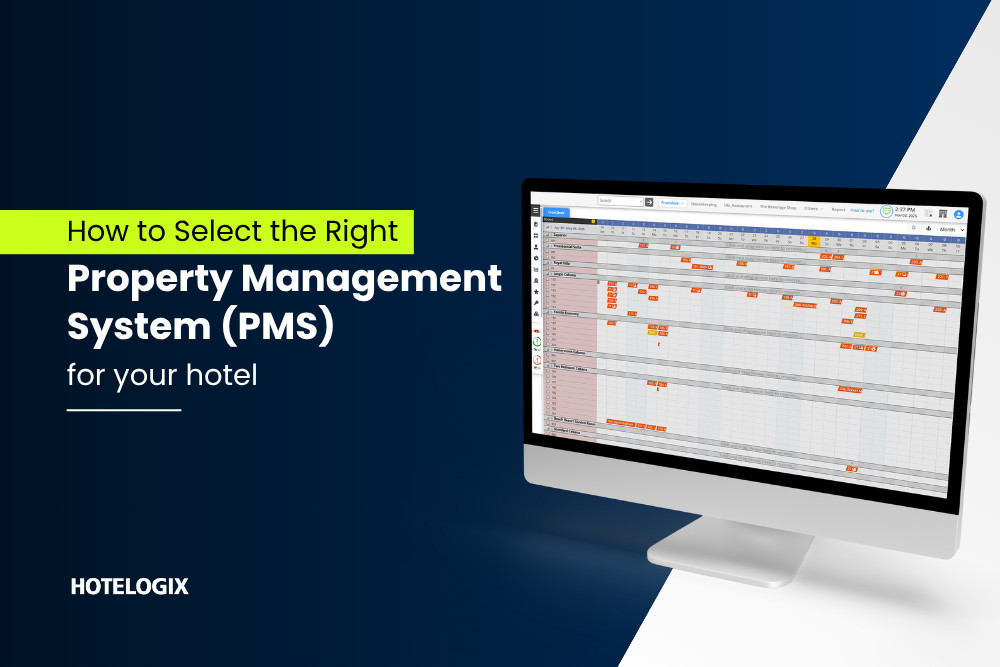
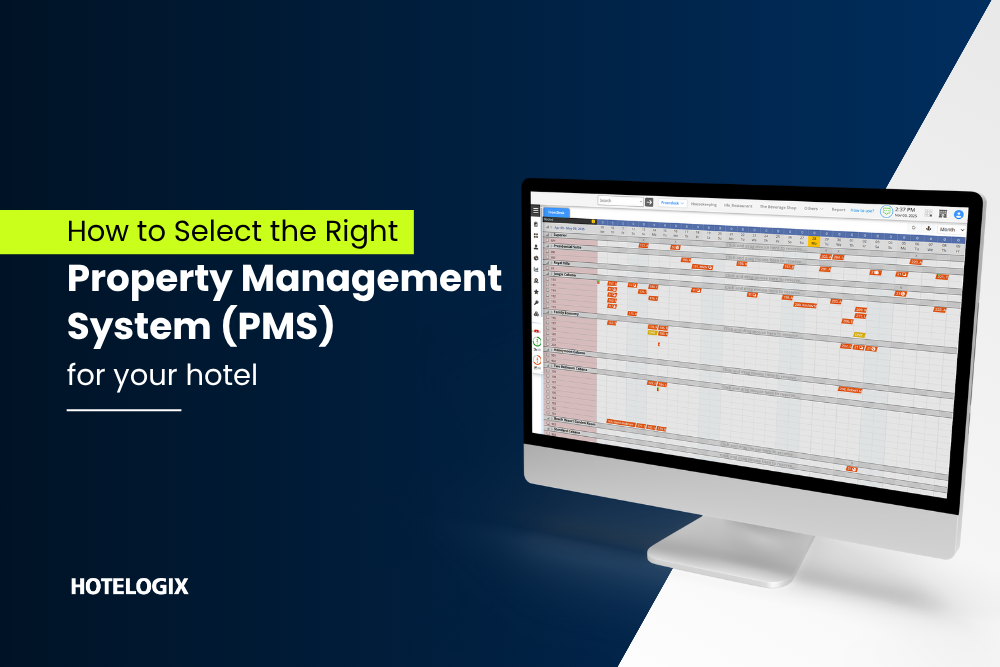
In the past, this was a manual, paper-driven process. Today, most successful hotels rely on a Property Management System (PMS) — a single, centralized platform that keeps the business organized, efficient, and profitable.
If you are still using spreadsheets or disconnected tools, now is the time to upgrade. The right PMS can be the difference between chasing operations and having complete control over your hotel’s performance.
Why Technology Is Critical for Modern Hoteliers
The hospitality industry is more competitive than ever. Guests now expect fast check-ins, seamless communication, and easy online booking. Without automation, operations slow down, staff get overworked, and guests notice.
Key Benefits of PMS Software for Hotels
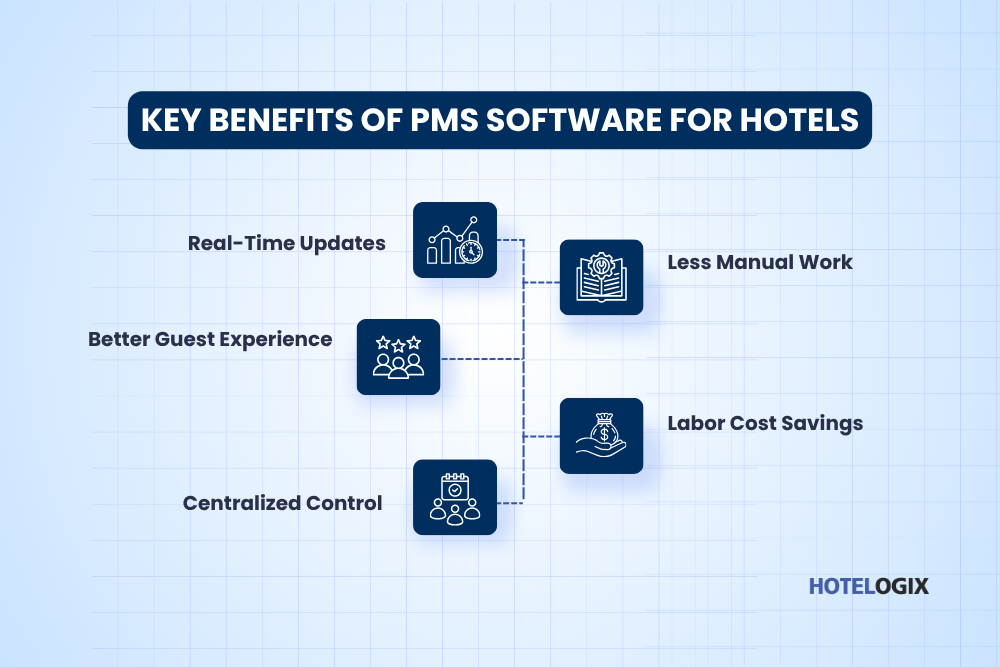
- Real-Time Updates: Avoid double-bookings by syncing availability across OTAs and direct bookings.
- Less Manual Work: Cut down on paperwork and manual errors.
- Better Guest Experience: Faster check-in, smoother stay, and personalized service.
- Labor Cost Savings: Automation allows you to operate with leaner staff without sacrificing service.
- Centralized Control: Especially important for multi-property operations.
Example: A mid-sized city hotel with 50+ rooms can save several man-hours daily by automating front desk tasks, freeing staff to focus on upselling, guest engagement, and service recovery.
Must-Have PMS Features Every Hotelier Should Look For
When evaluating PMS software, focus on the core features that make a real impact on daily hotel operations. This is one of the most important steps in finding the best hotel property management systems for your business.
Pro Tip: If you are a boutique or independent hotel, ensure the PMS is easy for staff to learn quickly — high turnover is common in hospitality, and a complicated system will slow onboarding.
Understanding Key Hotel Metrics (with Facts & References)
Modern PMS solutions don’t just track data — they help hoteliers make better business decisions. Here’s a deeper look at the most important metrics with real-world facts and references:
Why This Matters: By tracking these metrics in real time, hoteliers can respond proactively — e.g., running flash sales on low-occupancy dates, adjusting ADR ahead of peak season, or boosting marketing to improve direct booking ratios.
Cloud PMS vs. Legacy PMS: Which Is Right for You?
When choosing a PMS, you’ll likely be deciding between cloud-based and legacy (on-premise) solutions. Here’s a side-by-side comparison to help:
Industry Trend: 70%+ of independent hotels now prefer cloud-based PMS for its flexibility and mobile accessibility — especially useful for owners who travel frequently but still need real-time visibility into hotel performance.
Current Trends Shaping PMS Adoption
- Mobile-First Operations: Staff can manage tasks on tablets or smartphones.
- Direct Booking Growth: Hotels are investing in PMS with a web booking engine to cut OTA commissions.
- Contactless Guest Experience: PMS integrations enable self-check-in kiosks and mobile keys.
- Data-Driven Decisions: Revenue management tools are helping hoteliers set dynamic pricing based on demand.
- Multi-Property Management: Groups prefer PMS solutions with central reservation office (CRO) features for unified control.
Product Spotlight: Hotelogix PMS
- Multi-Property & CRS: Centralized control over reservations, inventory, and rates across all properties.
- Real-Time OTA Management: Automatically updates availability on OTAs, eliminating manual work.
- Integrated Web Booking Engine: Increase direct bookings and reduce dependency on third parties.
- Guest Services App: Guests can request housekeeping, order room service, or raise complaints from their phone.
- Actionable Reporting: See ADR, RevPAR, and occupancy trends at a glance for smarter decisions.
Many hotels report 20–30% higher direct booking revenue after switching to Hotelogix PMS because of its strong integration with the booking engine and channel manager.
Checklist for Selecting the Right PMS
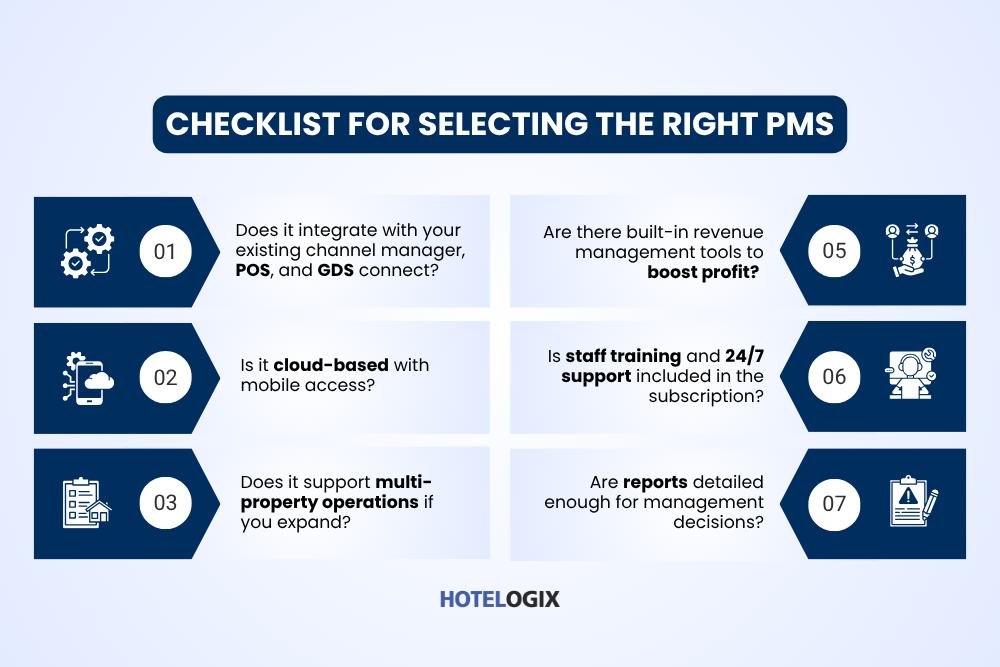
Before you finalize a PMS provider, go through this quick checklist:
- ✅ Does it integrate with your existing channel manager, POS, and GDS connect?
- ✅ Is it cloud-based with mobile access?
- ✅ Does it support multi-property operations if you expand?
- ✅ Are there built-in revenue management tools to boost profit?
- ✅ Is staff training and 24/7 support included in the subscription?
- ✅ Are reports detailed enough for management decisions?
Frequently Asked Questions (FAQ)
Q1-How much does a hotel PMS cost?
A-Most cloud PMS platforms follow a subscription model, starting from $3–$7 per room per month. Costs vary depending on integrations like channel manager or revenue management system.
Q2-How long does it take to implement a PMS?
A-Cloud PMS solutions can go live within 48–72 hours, while legacy PMS setups may take weeks due to server installation and staff training.
Q3- Is my hotel data safe in a cloud PMS?
A-Yes. Reputed vendors use encrypted servers, multi-layer authentication, and regular backups to ensure your data is secure.
Q4-Can a PMS help me reduce OTA dependency?
A-Yes. A PMS with a strong web booking engine and channel manager helps drive more direct bookings, giving you more control over rates and reducing commission costs.
Final Thoughts
A PMS is not just software — it’s the backbone of your hotel’s operations. Choosing the right one will streamline daily tasks, improve guest satisfaction, and grow your revenue.
Cloud-based PMS platforms with robust integrations are now the industry standard. If you want to stay competitive, look for solutions that offer automation, scalability, and actionable insights.
By investing in a future-ready PMS like Hotelogix, you can free your team from repetitive work, deliver a better guest experience, and focus on driving your hotel’s profitability.