
Your Hotel is a Hacker's Goldmine—Are You Prepared with tight security?
Picture this: a world-class hospitality luxurious hotel waking up to a nightmare. Overnight all guest credit-card details, passports numbers, personal data are all stolen. Fast forward the news, bookings have been cancelled and huge lawsuits await at the hotel.
This is not just imagination—it has occurred to Marriott, Ritz London, MGM Resorts, and many others. The cybercrime gang is attacking the hotels more than ever and are taking the weak security, out-of-date systems, and not trained staff for their benefits.
Cybercrime could cost businesses $10.5 trillion per year by 2025 One in three hospitality businesses experiences cyber-attacks; can your hotel afford to be unprepared?
This blog explains the biggest cyber threats facing hotels, real-world case studies, and an 8-step plan to make your hotel's security stronger—because stopping attacks before they happen is always better.
Reasons Hotels Are Prime Targets for Hackers
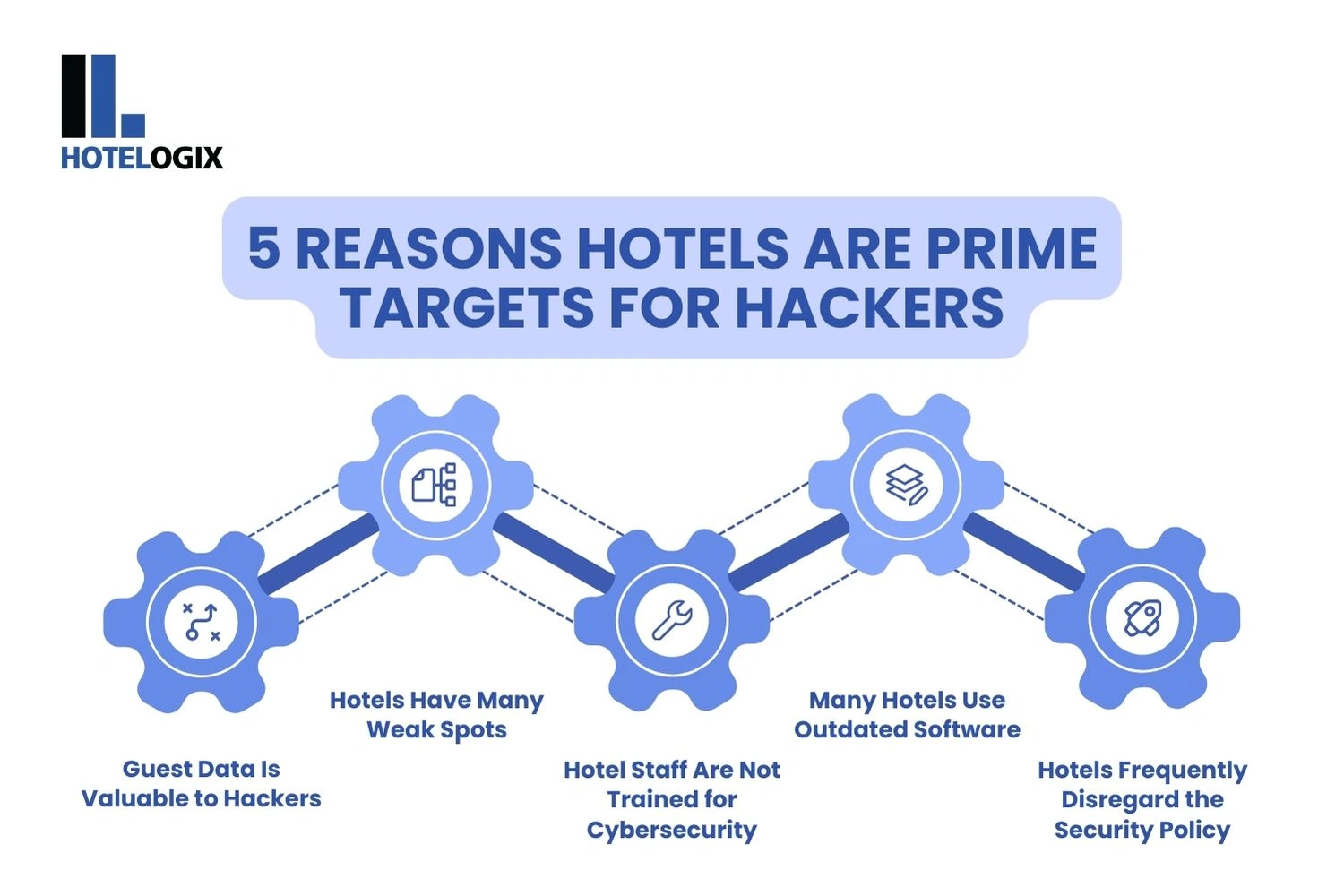
1.Guest Data Is Valuable to Hackers
Hotels store huge amounts of sensitive guest information like:
✔ Credit card details
✔ Passport and ID numbers
✔ Phone numbers and home addresses
✔ Email IDs and travel details
The hackers steal this data in order to sell online or use them for identity theft. Hackers in 2019 stole and leaked 10.6 million guest records from MGM Resorts
2.Hotels Have Many Weak Spots
A hotel's digital system has a lot of access points such as:
- Online booking platforms
- POS (Point-of-Sale) systems
- Cloud-based Property Management Systems (PMS)
- Third-party integrations (OTA, payment gateways, CRM)
- Open Wi-Fi networks
Hackers only need one weak spot to break in and cause damage.
3.Hotel Staff Are Not Trained for Cybersecurity
A staggering 27 percent of hotel executives disclosed that their staff never receives cybersecurity training . One bad click on a phishing email can let hackers into the system.
4.Many Hotels Use Outdated Software
Many hotels are still using outdated PMS, old POS systems, and unsecured Wi-Fi access. Failure to upgrade the software puts the attack surface open and available for hackers to exploit pre-reported security vulnerabilities.
5.Hotels Frequently Disregard the Security Policy
Failure to comply with GDPR, PCI DSS, and other data protection regulations attracts hefty fines. For instance, Marriott was fined £18.4 million ($23 million) in the UK for not protecting 339 million guest records (BBC).
Hotel Cyber-Attacks That Made Headlines
1.Marriott's $23 Million Data Breach
In 2018, cybercriminals hacked Marriott's reservation system and robbed guest data for four years before being caught .
2. Ritz London: Hackers Pretended to Be Hotel Staff
Hackers broke into the restaurant's reservation system and called guests posing as verifying credit card payments. Many guests were unaware of giving their card details to fraudsters .
3.MGM Resorts: 10.6 Million Guest Records Sold Online
Hackers gained access to MGM's database and made off with names, emails, phone numbers, and addresses of CEOs and VIP guests. This information was sold for as little as $2 per record .
7 Largest Hotel Cybersecurity Vulnerabilities
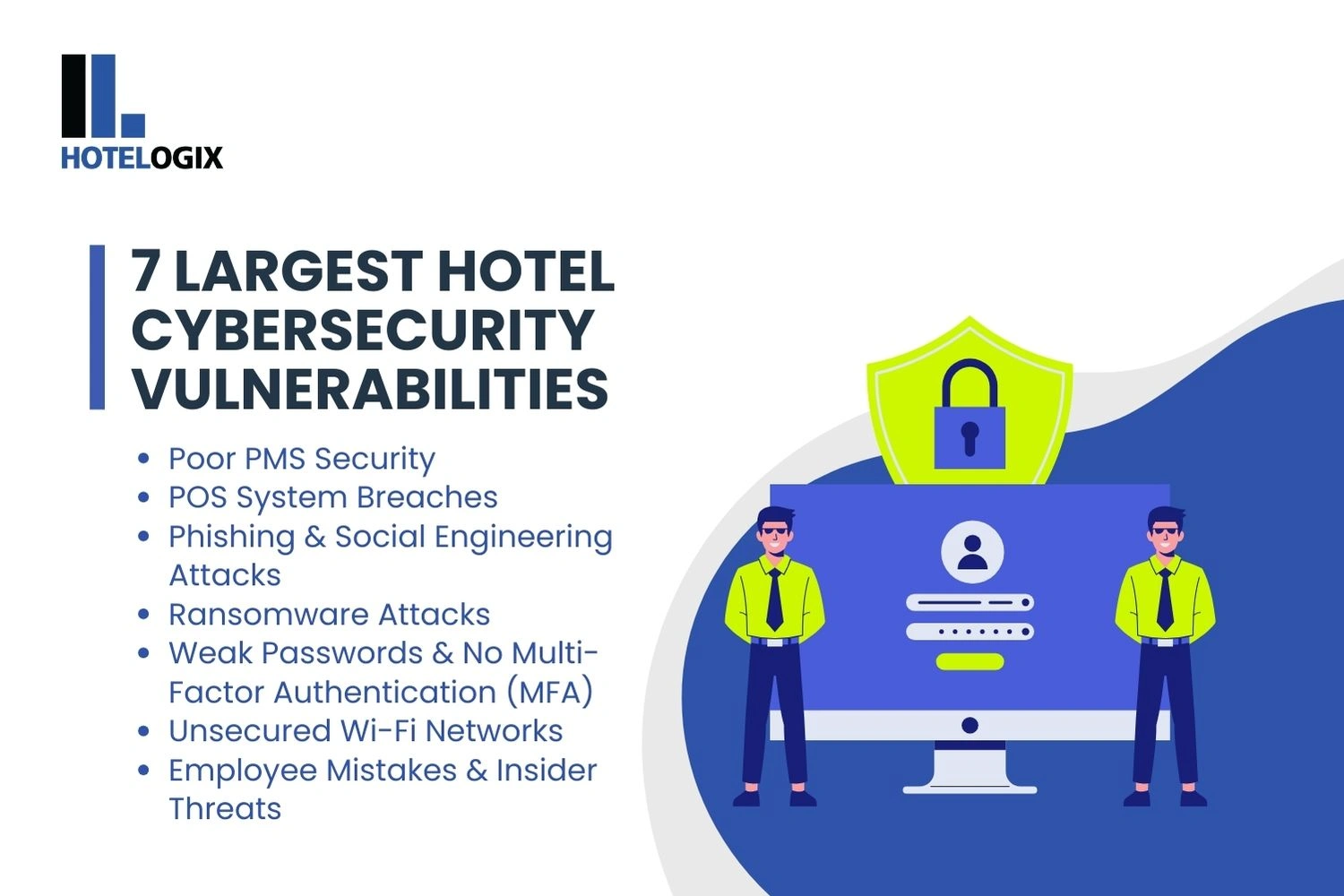
1.Poor PMS Security
Weak passwords
No encryption
No software updates
2.POS System Breaches
Malware that captures credit card data
Card skimming at hotel restaurants & spas
3.Phishing & Social Engineering Attacks
Employees are conned into handing over login credentials
Cyber-crooks pose as hotel staff
4.Ransomware Attacks
Hotel systems held hostage, ransom demanded
Some hotels pay millions to regain system control
5.Weak Passwords & No Multi-Factor Authentication (MFA)
65% of breaches occur due to weak passwords
No MFA makes easy logging for hackers
6.Unsecured Wi-Fi Networks
Hackers fake "hotel Wi-Fi" networks
Man-in-the-middle attacks enable hackers to sniff data
7.Employee Mistakes & Insider Threats
Leaking of data by disgruntled employees
Clicking on malware links from untrained staff
How Much Does a Cyber-Attack Cost Hotels?
$4.35 million – The average cost of a hotel data breach
$100,000+ – Fines in case of failure to comply with the GDPR.
Losses in weeks due to system shutdowns and lawsuits.
65% chances of customers not returning after a cyber attack
1.The Cost of a Hotel Data Breach: $4.35 Million
A single breach in the hospitality industry costs approximately $4.35 million, which includes:
Investigation of the breach: hiring cybersecurity experts.
Notifying guests whose data has been stolen.
Legal fees for non-compliance.
Compensation to guests affected by the breach, including refunds or free stays.
Security system upgrades to prevent future breaches.
2. GDPR Non-Compliance Fines: $100,000+
The General Data Protection Regulation (GDPR) safeguards customer data. In case a hotel does not adhere to GDPR rules (such as improper storage or leakage of guest data), it incurs severe penalties.
Illustration: Marriott was fined £18.4 million ($23 million) for failing to protect guest records.
3. Revenue Loss Due to System Failure & Litigations
Cyber-attacks can close reservations, POS systems, and customer service lines and cost millions of dollars in revenue.
Lawsuits from guests who had their information stolen are further added to costs.
Affected hotels take months of time to retrieve.
4.65% of Guests Will Not Return Post Cyber-Attack
Loss of client trust is most damaging.
Customers do not like to use credit cards at impacted hotels.
Deterrent Press and negative words of mouth by new customers who do not join.
Bottom Line: Cyber-attacks not only cause financial losses but destroy a hotel's reputation, leading to long-term damage. Investing in cybersecurity prevents these losses before they happen.
8 Steps to Protect Your Hotel from Hackers
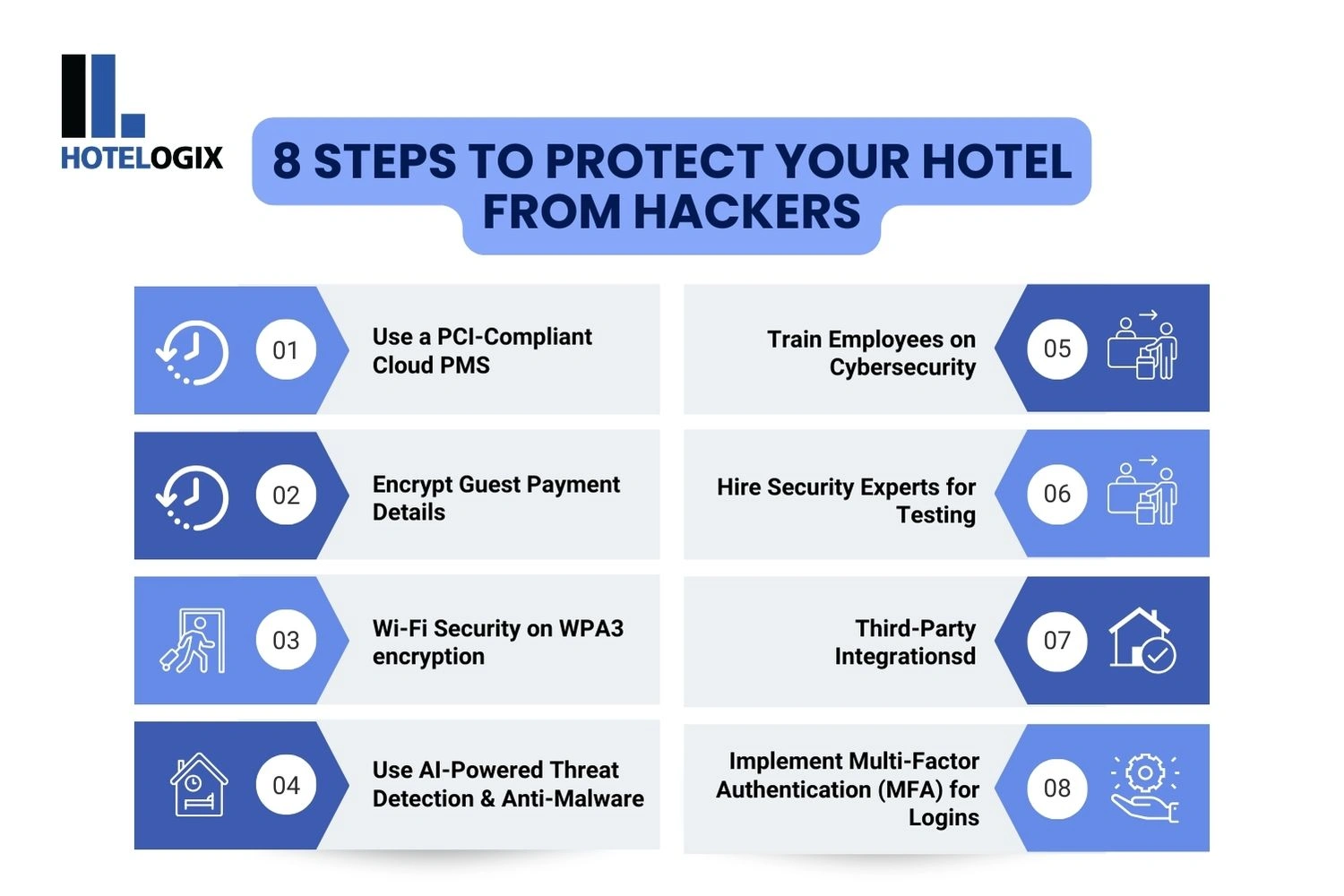
Essential Cybersecurity Measures for Hotels
Running a hotel isn't only about providing excellent hospitality but also ensuring the security of guest data. Cyber threats are on the rise, and hotels are the first choice of cybercriminals as they store sensitive information like credit card details and personal guest records. We have listed down some practical cybersecurity measures to help you stay ahead of cybercriminals. Every hotel should implement these measures in their hotel.
1. Use a PCI-Compliant Cloud PMS
Your Property Management System is the spine of hotel operations - managing booking, guest data, and payments. A PCI-compliant PMS guarantees all credit card transactions meet the highest standards of security as stated in the Payment Card Industry Data Security Standard - PCI DSS.
Why so important:
✅Encrypts guests' credit card information to avoid data theft.
Limits the storage and access of sensitive information, hence reducing the chance of insider threats.
✅ Automates security updates, so you’re not stuck handling them manually.
A cloud-based PMS like Hotelogix adds another layer of security with real-time monitoring, making it harder for hackers to break in.
2. Encrypt Guest Payment Details
Every day, hotels process thousands of transactions. If hackers get access to payment data, it could be disastrous. Encryption ensures that even if someone intercepts the data, they can’t use it.
How to keep payments secure:
✔ Use End-to-End Encryption (E2EE) to safeguard transactions.
✔ Use Tokenization that replaces actual card numbers with safe tokens.
Use PCI DSS-compliant payment processors for guests' financial security.
3. Wi-Fi Security on WPA3 encryption
Guests come to hotels looking for quick, free Wi-Fi, but without proper security measures in place, your network becomes an open door for hackers. A fragile hotel Wi-Fi network leaves guests vulnerable to data theft.
Best practices in secure Wi-Fi:
Upgrade to WPA3 encryption-it is the latest and the most secure standard.
Create separate networks for guests, staff, and smart hotel devices (like security cameras and keyless entry systems).
Switch off public access points that do not require a password
4. Use AI-Powered Threat Detection & Anti-Malware
Gone are the days when basic antivirus software could keep your systems safe. Cybercriminals are getting smarter, and hotels need AI-powered security tools that detect threats in real time.
How AI helps:
Identifies suspicious activity, like unauthorized logins or malware attempts.
Blocks ransomware attacks before they spread.
Automatically updates security measures to defend against new threats.
5. Train Employees on Cybersecurity
You did not know that 90% of all cyber-attacks occur due to human error, whether an employee clicks on a phishing link or utilizes weak passwords, simple mistakes can lead to major security breaches.
What staff should be trained on:
Recognizing phishing emails—never click on suspicious links!
Using strong passwords and updating them regularly.
Handling guest data responsibly—only authorized staff should access sensitive information.
Regular training sessions can go a long way in reducing cyber risks.
6. Hire Security Experts for Testing
Think of this as a cybersecurity "fire drill" for your hotel. Professional cybersecurity testers (often called penetration testers) simulate hacker attacks to expose weak spots in your system.
Why this is a must:
✔ Uncovers security gaps before real hackers do.
✔ Strengthens your systems, making them harder to breach.
✔ Ensures compliance with industry security standards.
7. Third-Party Integrations
Most hotels use third-party software for bookings, payments, and guest services. However, if these external systems are not secure, they can be the weakest link in your cybersecurity chain.
How to secure integrations:
Vet all vendors carefully before connecting their software to your hotel systems.
Limit API access-not every service needs full access to guest data.
Encrypt data transfers between your hotel and external providers
8. Implement Multi-Factor Authentication (MFA) for Logins
Use passwords to log in no more. With today's exploits by hackers, passwords alone don't suffice to keep out hackers. Multi-Factor Authentication (MFA) adds an extra layer of security by requiring yet another means of verification, such as a code sent to a phone or fingerprint scan.
Why MFA is game-changing:
Even if a hacker steals a password, they cannot still login with the additional verification step.
Prevent brute-force attacks, in which hackers attempt multiple password combinations.
Lower the risk of internal threats because logins require additional authentication.
What Makes Hotelogix to Help You Secure Your Hotel?
- AI-powered threat detection
- Secure payment processing
- Periodic security updates
- Cybersecurity support 24X7
With Hotelogix, you can safeguard your guest data, shield your reputation, and prevent losses as well.
Conclusion: Secure Your Hotel Before It's Too Late
Cyber threats are growing fast, and hotels must act now to protect guest data and business operations.
Don't wait until it's too late—start protecting your hotel today!