
If you're still juggling five different systems just to check in a single guest, you're probably losing your mind (and a ton of money). I've spent years watching hotel owners click between endless tabs, manually update inventory across platforms, and then awkwardly explain to frustrated guests why their "confirmed" reservation somehow disappeared.
Sound familiar? Yeah, I thought so.
If ResNexus is your current solution and you're finding yourself constantly muttering "there has to be a better way" under your breath – this one's for you. Let's dive into some alternatives that won't make you want to throw your computer out the window.
Why All-in-One Software Actually Matters
You know that feeling when a guest is standing at your front desk, tired from traveling, and you're frantically toggling between systems trying to find their reservation? And then the invariable stare-off happens.
That painful moment costs you more than just awkward silence. According to PWC, hotels lose an average of $200,000 annually on manual data entry and redundant processes. That's not pocket change, folks!
The worldwide PMS market is expected to grow from $2.5 billion to a whopping $7.3 billion by 2031.
Why? Because hotel owners are finally saying "enough!" to the madness of disconnected systems.
If there were three words to sum up the ideal hotel operations strategy – Automate. Automate. Automate.
Why burden hotel staff with tasks that are repetitive, mundane and most of all, demanding, when you can streamline all of it with one system? Your team deserves better than spending their shifts as glorified data entry clerks.
How I Actually Evaluated These Systems (Without Vendor Bias)
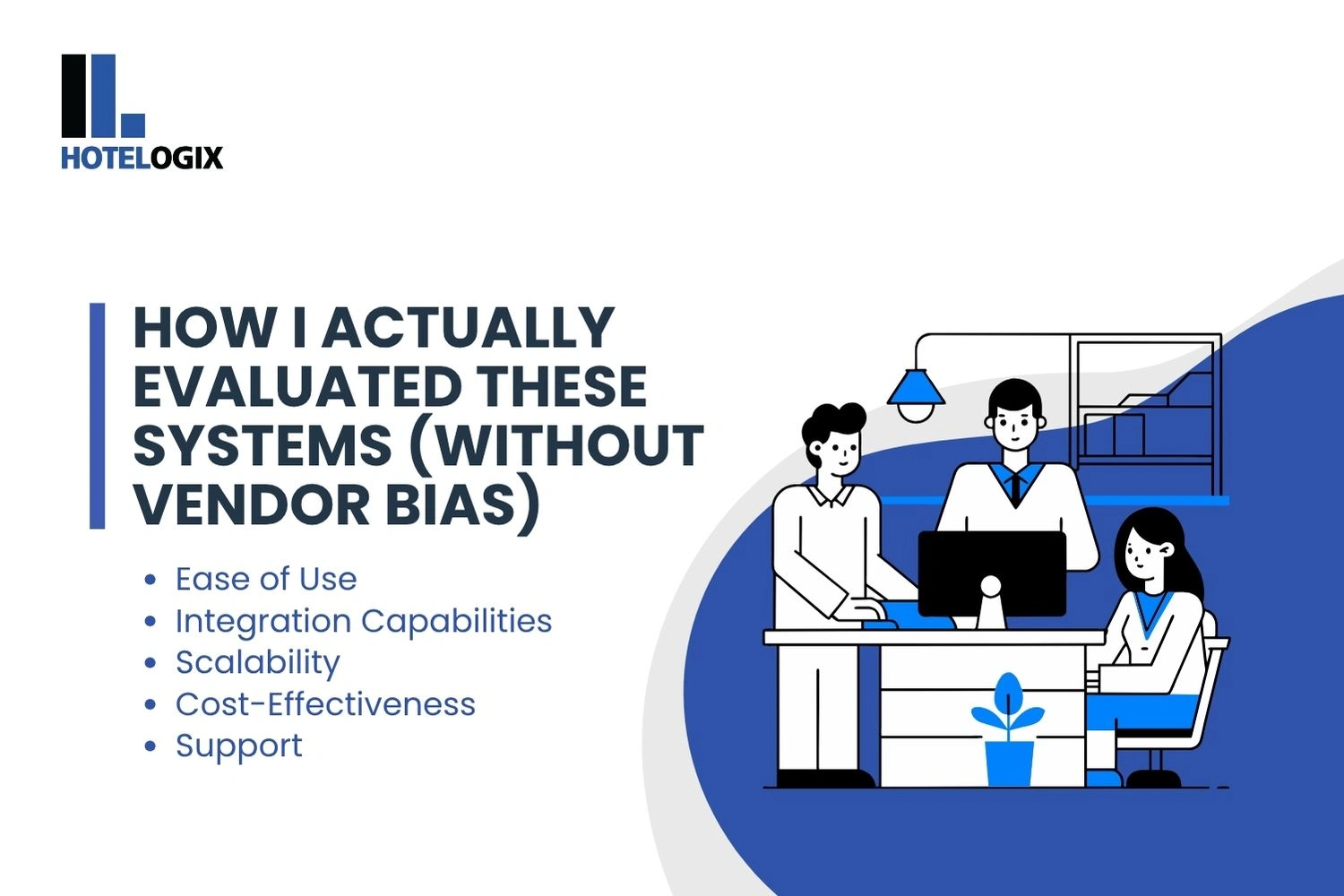
Look, we've all sat through those painful sales demos where everything seems "seamless" and "intuitive" until you actually buy it. So here's what I looked for instead:
- Ease of Use: Is this something my team can actually use without needing constant tech support? I wanted a system so simple that even my tech-averse uncle could figure it out. No need for lengthy training sessions—just a platform that’s ready to go from day one.
- Integration Capabilities: Can it sync smoothly with my OTAs and other tools I already use? The last thing I need is a system that forces me to manually update every platform. I need a solution that connects everything and makes sure my operations flow without hiccups.
- Scalability: What happens as my business grows? I didn’t want a system that would be a good fit today but too small tomorrow. A strong property management system should evolve with your business—whether you're expanding to more rooms or more locations.
- Cost-Effectiveness: Are we paying for features we don’t need? Systems can be pricey, and I didn’t want to get stuck paying for tools that wouldn’t benefit my operation. The right system should balance price and function, giving us just what we need without the extras we’ll never use.
- Support: What happens when things go wrong at 3 AM? Will I be stuck without help? A reliable support system is a must. You need to know that if anything goes wrong, there's a team ready to assist—no matter when.
The Good Stuff: 5 Platforms That Actually Deliver
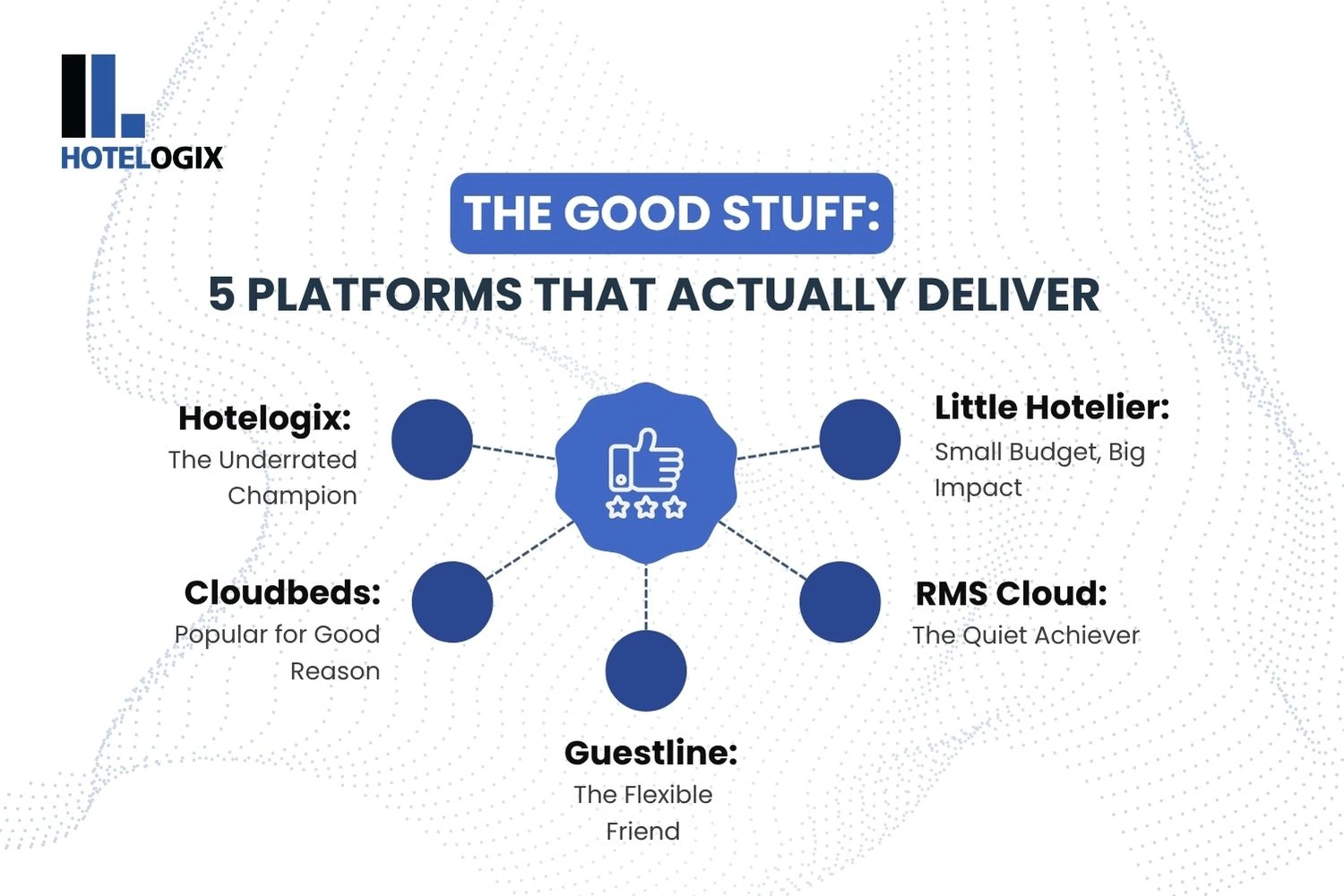
1. Hotelogix: The Underrated Champion
Hotelogix is like that reliable friend who doesn't brag much but always delivers when it counts. It's not the flashiest option out there, but it handles property management, booking engines, and channel management without making a fuss.
What makes it special? It's built for the real world where not everyone on your staff is a tech genius. The interface is clean, the learning curve isn't steep, and it scales nicely whether you're managing a 10-room B&B or expanding to your third property.
2. Cloudbeds: Popular for Good Reason
Cloudbeds has been getting a lot of attention lately, and honestly? It deserves it. Their user interface doesn't make you want to cry, their reporting tools actually tell you useful things about your business, and – miracle of miracles – their customer support answers the phone.
I've watched small hotels transform their operations within weeks of implementation. One owner told me she finally took a vacation after five years because she could actually manage everything remotely. That's the dream, isn't it?
3. Guestline: The Flexible Friend
Guestline is that rare system that works just as well for the independent boutique hotel as it does for bigger chains. Their revenue management tools are particularly impressive – because let's face it, dynamic pricing shouldn't require a math degree.
The real-time channel management means you can finally stop worrying about those nightmare overbooking scenarios that have you offering awkward apologies and frantically calling nearby hotels at midnight.
4. Little Hotelier: Small Budget, Big Impact
If you're running a smaller property and your eyes water at the pricing of some systems, Little Hotelier might be your new best friend. It's specifically designed for smaller operations but doesn't skimp on the essentials.
What I love about this one is how it handles the basics exceptionally well without overwhelming you with features you'll never use. Sometimes less really is more – especially when you're paying by the month.
5. RMS Cloud: The Quiet Achiever
RMS Cloud might not have the marketing budget of some competitors, but it's quietly winning over properties that need serious flexibility. Their system adapts to your workflow instead of forcing you to change everything about how you operate.
It's particularly good if you have unique needs that don't fit neatly into the standard hotel box – like properties with mixed accommodation types or unusual booking rules.
Why Hotelogix
It is absolutely unacceptable if you're still depending on traditional ways of checking guests in and out. Hotelogix solves this with a comprehensive but straightforward approach that won't bankrupt smaller properties.
What really sets it apart:
- It's actually designed by people who seem to understand hotels, not just software
- The mobile app means you're not chained to the front desk (freedom, sweet freedom!)
- Its pricing won't make you question all your life choices
- Staff training takes days, not weeks
- The scalability means your technology can grow as your business does
What truly stands out:
Questions You're Probably Asking Yourself
Q1-What exactly makes a system 'all-in-one'?
A-Think of it as your digital Swiss Army knife – it handles property management, bookings, channel management, and revenue optimization all in one place. No more data entry gymnastics or system reconciliation headaches.
Q2-Will switching be a nightmare?
A-I won't sugarcoat it – transitions are never seamless. But these systems have gotten much better at data migration. The temporary pain is worth the long-term gain. Just don't try to switch during your peak season (I've seen that horror movie, and it doesn't end well).
Q3-Can these systems really grow with my business?
A-Yes! That's the beauty of modern cloud-based platforms. Most offer tiered pricing and modular features that adapt as you expand. Your small B&B today could be a boutique hotel chain tomorrow without outgrowing your tech.
Q4-How much money will this actually save me?
A-Beyond the obvious $200,000 from eliminating manual data entry, you'll see savings in staffing efficiency (15-20% operational cost reduction is common), fewer booking errors, and better revenue management. One property owner told me she increased RevPAR by 22% just by implementing dynamic pricing tools that came with her new property management system.
Final Thoughts From Someone Who's Seen It All
We've all heard variations of these comments far more frequently than we'd like: "Sorry, our systems aren't connected," or "Let me check another computer," or the dreaded "That reservation doesn't seem to be in our system."
Each one is a tiny crack in your guest's experience, and those cracks add up quickly.
The right all-in-one system isn't just about making your life easier (though that's a fantastic benefit). It's about creating the kind of seamless experience that turns first-time guests into loyal customers who rave about your property.
So take a hard look at your current setup. Count how many different logins your staff needs to get through a single shift. Calculate the hours spent reconciling data between systems. Then imagine a world where all that frustration just... disappears.
That world exists. And it's just one software change away.