


For small and independent hotels, every opportunity to boost revenue without compromising guest satisfaction is worth exploring. One of the most effective yet often overlooked methods is the implementation of hotel surcharges. When applied transparently and strategically, these additional charges can significantly enhance profitability while maintaining guest trust.
In this guide, we explore how small hoteliers can use hotel surcharges—from resort fees to incidental charges—to optimize income, streamline operations using hotel management software, and deliver a better guest experience.
What Is a Hotel Surcharge?
A hotel surcharge is an extra fee added to the guest’s bill beyond the base room rate. Unlike hidden charges, surcharges are typically tied to specific services or amenities, such as parking, early check-in, or Wi-Fi access.
They serve two key purposes:
- Recover operational costs from non-essential services
- Create new revenue streams without inflating the headline room rate
In competitive markets, a clear breakdown of charges can help hoteliers stay price-sensitive while still earning from value-added services.
Common Types of Hotel Surcharges
Small properties often underestimate the number of services they could itemize. Below is a comprehensive table outlining the most common types of hotel charges and fees:
Understanding these options allows you to customize fees based on services you actually offer.
Why Should Small Hoteliers Implement Surcharges?
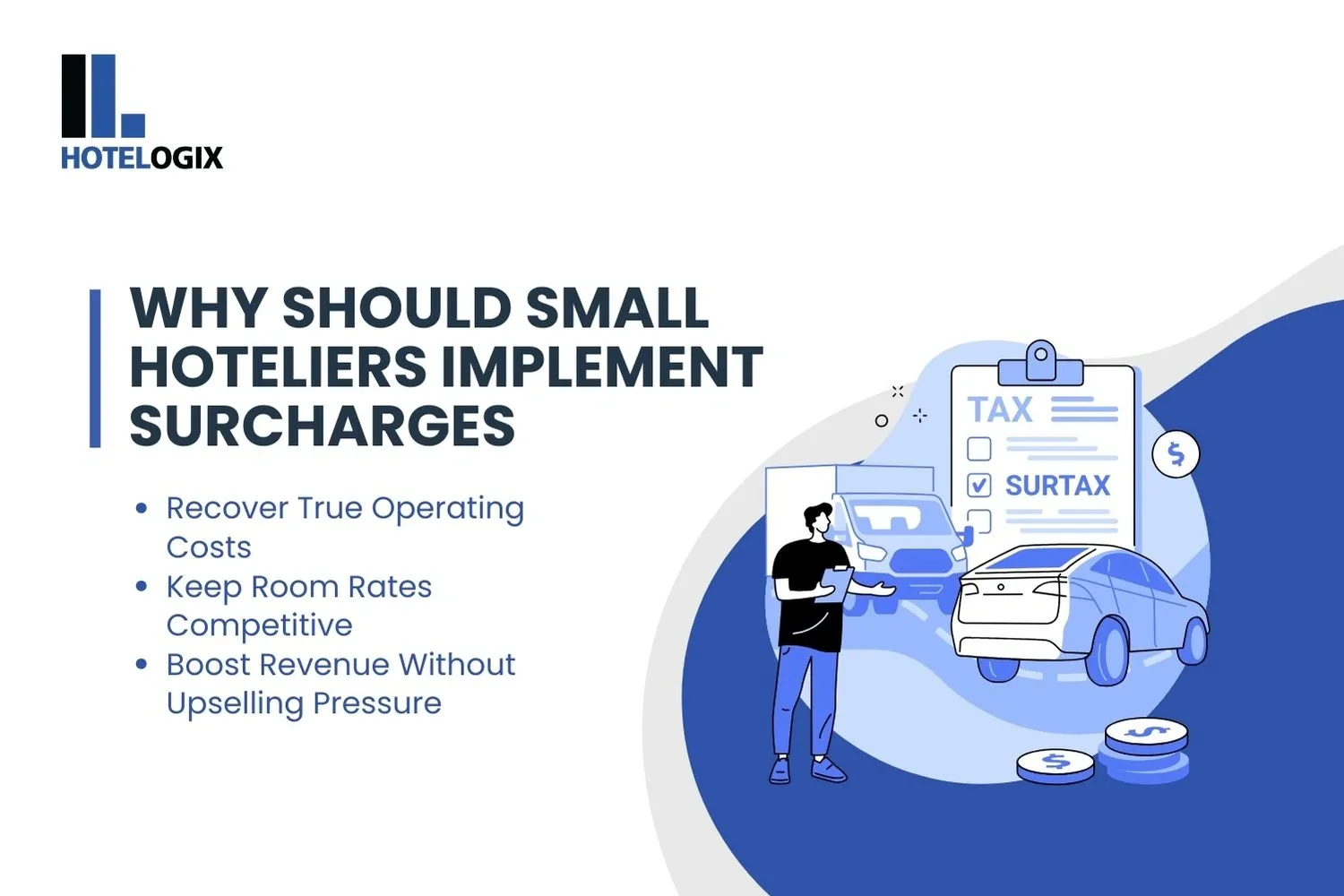
1. Recover True Operating Costs
Certain services—Wi-Fi, extra linen, energy usage—carry costs that aren’t reflected in the room rate. Surcharges enable you to recoup these expenditures fairly.
2. Keep Room Rates Competitive
Rather than inflating your base rate to include all services, offer a stripped-down rate with optional add-ons. This helps you stay competitive on Online Travel Agencies (OTAs).
3. Boost Revenue Without Upselling Pressure
These small charges, when accumulated, can increase your average daily rate (ADR) and RevPAR. For example, according to Statista, U.S. hotels earned $2.9 billion from surcharges in 2018, and this model continues to grow as travel rebounds.
Transparency Is Critical
Hidden fees are among the top guest complaints in the hospitality industry. To avoid negative reviews and chargebacks, be fully transparent about all surcharges.
Best Practices:
- List fees clearly on your website and booking engine
- Mention them in confirmation emails
- Explain them during guest check-in
- Include signage or in-room guides outlining the fees
- Offer clear benefits (e.g., “$15 for unlimited premium Wi-Fi and gym access”)
Using a reliable hotel reservation software system can automate this process and reduce manual errors.
Structuring Your Surcharges Strategically
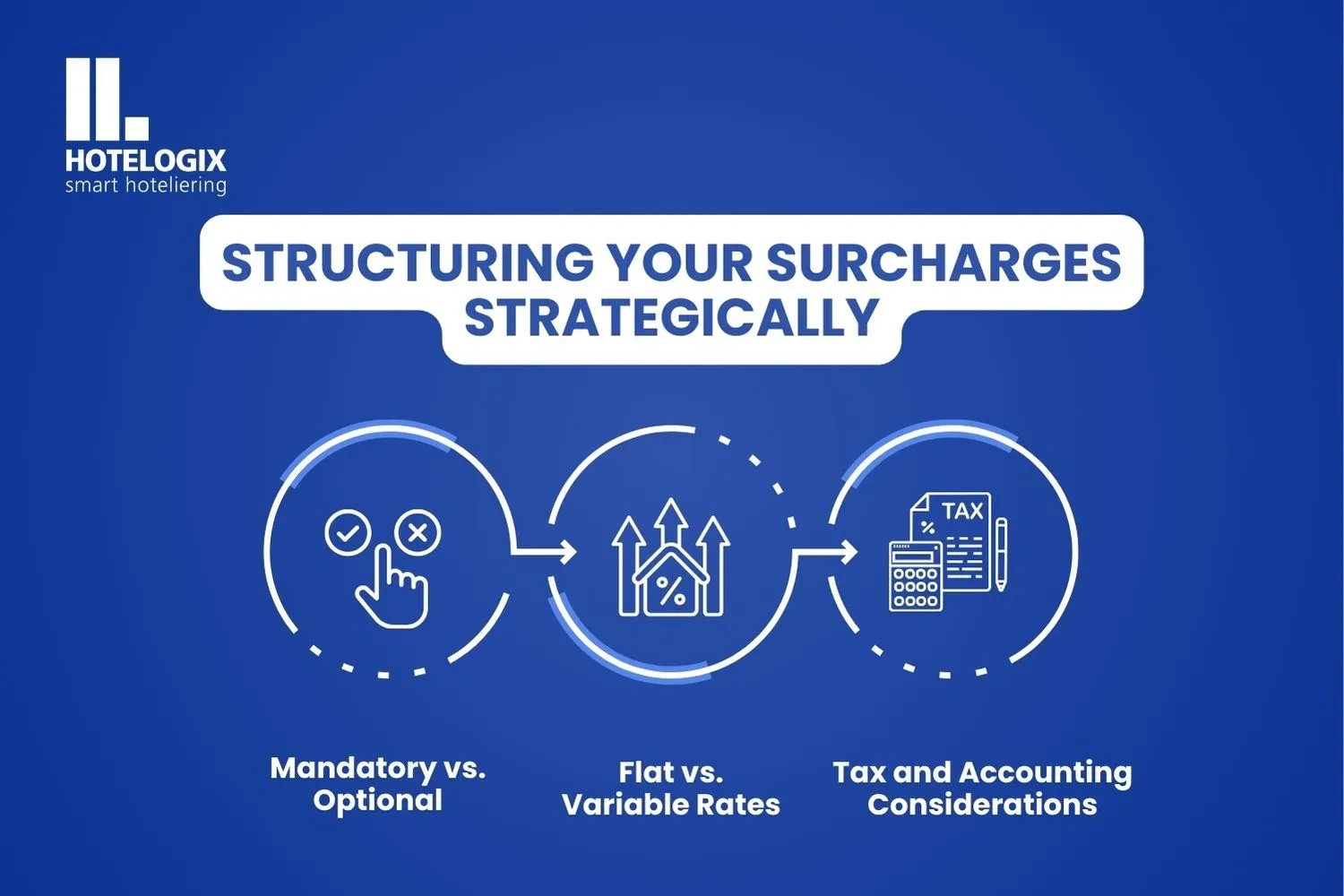
1. Mandatory vs. Optional
- Mandatory surcharges (e.g., resort fees) should be justified with clear guest value.
- Optional fees (e.g., early check-in) give guests control over added costs.
2. Flat vs. Variable Rates
- A flat $10 fee is easier to manage but may undercharge heavy users.
- A variable fee (e.g., 5% of the room rate) adapts to peak seasons and higher-value bookings.
3. Tax and Accounting Considerations
Surcharges may be taxed differently than room rates. Be sure to check local regulations and configure your hotel management software to reflect this properly.
How to Use Software to Simplify Surcharge Management
Modern revenue management software and hotel reservation software make it easier than ever to manage surcharges efficiently:
- Automated Pricing: Adjust fees based on seasonality and demand
- Integrated Billing: Seamlessly include fees in guest folios
- Data Insights: Track which surcharges are most accepted or rejected
- Multi-channel Consistency: Ensure uniform fee display across OTAs, your website, and POS
Real-World Examples
Here are some benchmarks and averages:
- US resort fees: ~$35 per night or approximately 8.1% of the total room cost
- Late check-out fee: $20–$50 depending on hotel class and location
- Wi-Fi upgrades: $5–$15/day for premium bandwidth
- Surcharge contribution: For some hotels, up to 15–20% of profit margins comes from optional or bundled fees
Step-by-Step Guide to Rolling Out Hotel Surcharges
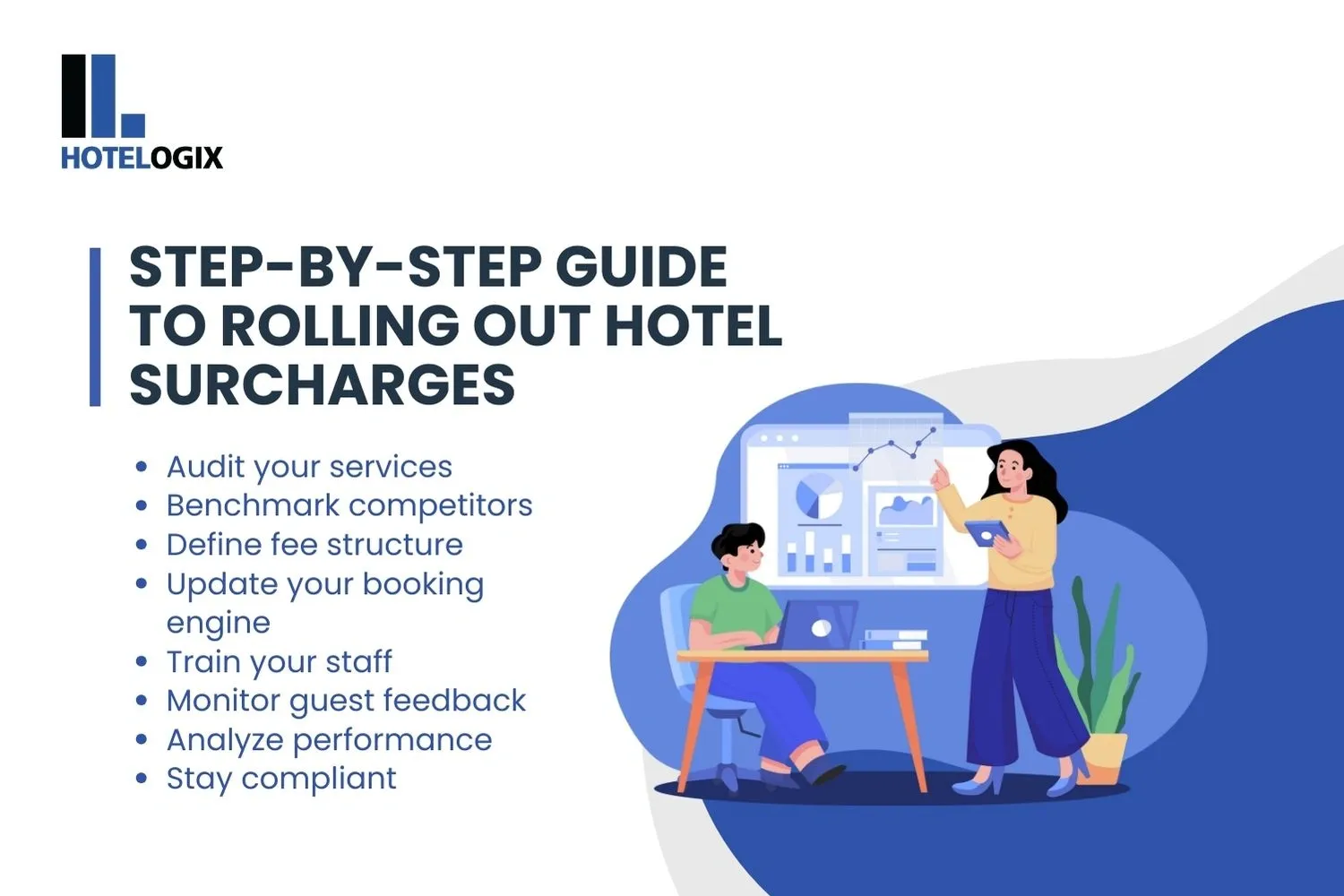
- Audit your services – Identify cost-heavy or value-added services.
- Benchmark competitors – Understand what others charge in your area.
- Define fee structure – Choose between flat, seasonal, or usage-based pricing.
- Update your booking engine – Use hotel reservation software to show fees early.
- Train your staff – Ensure they can explain charges confidently and consistently.
- Monitor guest feedback – Use it to tweak or clarify your charges.
- Analyze performance – Track uptake and revenue via your revenue management software.
- Stay compliant – Regularly review laws on disclosure and taxation.
Leverage Hotelogix for Seamless Surcharge Management
One standout feature is Hotelogix’s Front Desk Module, which allows hoteliers to:
- Define custom surcharge types (e.g., resort fees, early check-in)
- Automatically apply them to specific room categories or booking sources
- Ensure all additional charges reflect accurately on guest folios
- Sync surcharge details across OTAs and your web booking engine for consistent guest experience
In addition, Hotelogix supports GDS connect, enabling small properties to distribute rates and surcharge-inclusive pricing to a global network of travel agents and corporate bookers.
For small hoteliers, this eliminates manual tracking and reduces errors, while maintaining complete visibility and control over revenue sources.
By using Hotelogix, you can align your hotel chargeback policy, guest communications, and billing workflows—all while maximizing profitability through smart, transparent surcharges.
Conclusion
When implemented transparently and supported by smart systems, hotel surcharges can help small hoteliers boost profitability without sacrificing guest satisfaction. By charging for the services guests value most—and communicating those charges clearly—you can create a win-win model that benefits both your business and your guests.
Start by auditing your current services, use the right hotel management software, and test your surcharge strategy. Done right, it’s one of the most powerful tools in your revenue management toolkit.