
In the hotel business, setting the right room rates is not just about numbers—it’s a key part of making more money and staying ahead of the competition. Whether you manage a boutique hotel, a guesthouse, or a group of hotels, applying the right pricing strategy can help you increase bookings and boost revenue.
Let’s look at some of the most effective hotel pricing strategies, based on industry trends and practical use, and how using a Cloud Hotel PMS can make these strategies easy to manage.
What Is a Hotel Pricing Strategy and Why It Matters
A hotel pricing strategy is simply the way you decide how much to charge for your rooms. This is based on things like the time of year, how many bookings you already have, what your competitors are charging, and the type of guests you attract.
Why it’s important:
- If you charge too much, guests may book somewhere else.
- If you charge too little, you may fill rooms but lose money.
With the right pricing approach, you can improve your occupancy, earn more per room, and grow your hotel business.
What Affects Your Room Rates
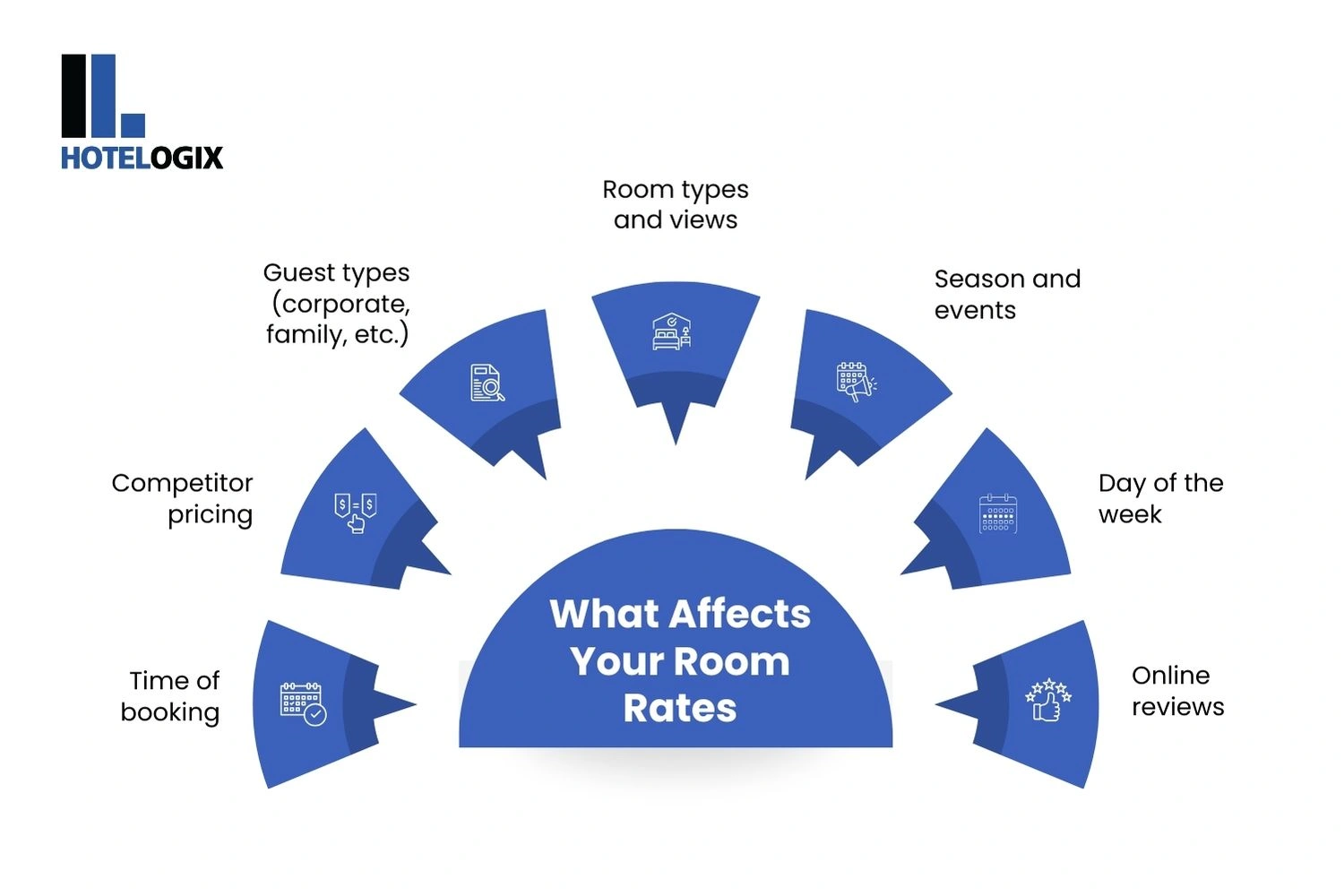
Before setting your prices, consider these important things:
Top Hotel Pricing Strategies to Use
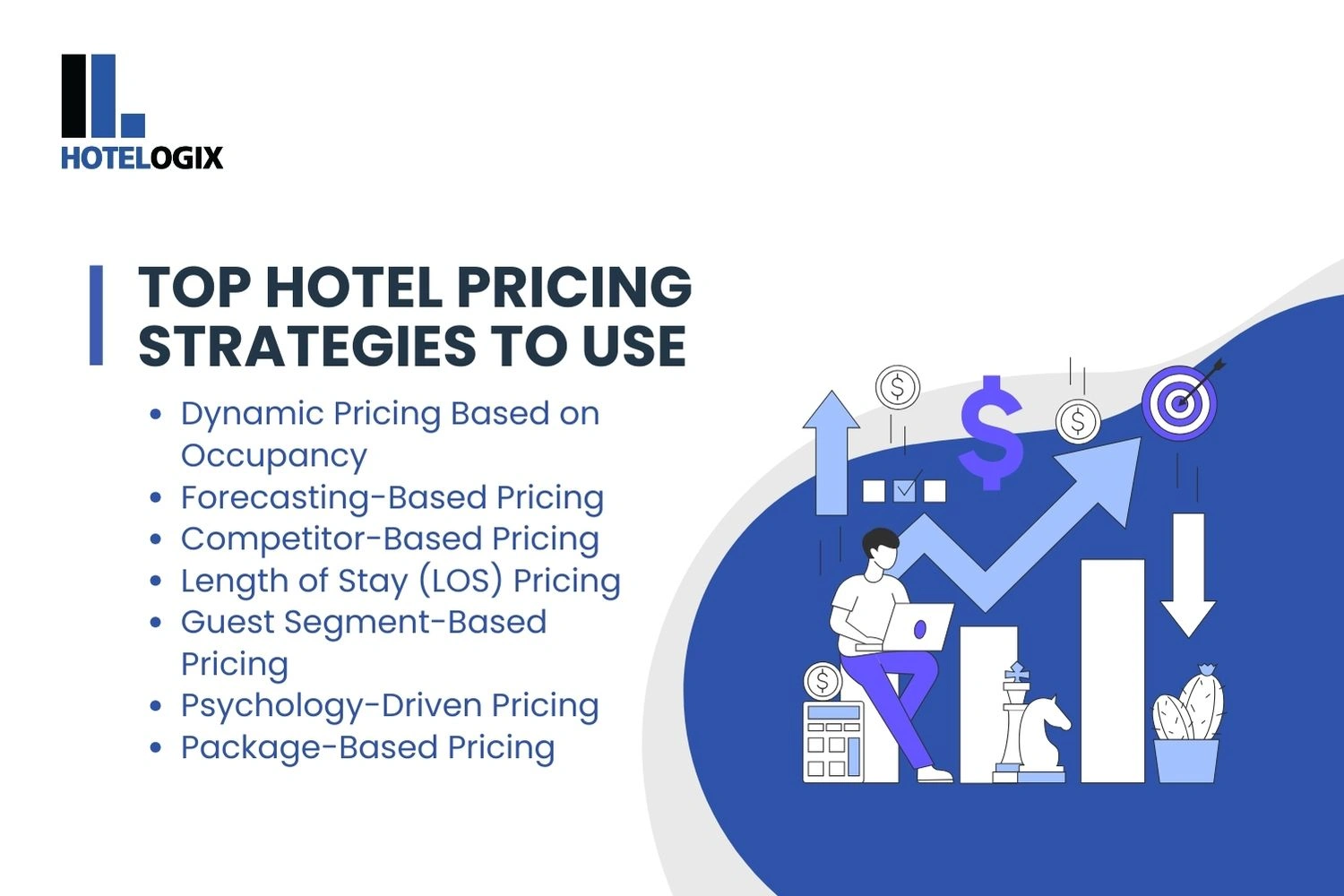
1. Dynamic Pricing Based on Occupancy
This means changing your room rates based on how full your hotel is.
- When you have few bookings, offer lower prices to attract guests.
- When your hotel is almost full, increase the price of the remaining rooms.
Tip: Use a system like a Cloud PMS that can automatically change prices when occupancy changes.
2. Forecasting-Based Pricing
This strategy is about using past data to guess future demand and set prices in advance.
You can:
- Look at past months or last year’s booking trends
- Check if local events are happening soon
- Adjust your prices early, before competitors do
Why it helps:
- Better planning for peak seasons
- Higher revenue during busy times
- Fewer last-minute decisions
3. Competitor-Based Pricing
This means checking what other nearby hotels are charging and setting your prices to match or offer better value.
Tip: Don’t just compete on price—also show the value you offer.
4. Length of Stay (LOS) Pricing
This strategy gives different prices based on how long a guest stays.
- Offer discounts for longer stays
- Set minimum stay rules during busy seasons
- Charge more for short stays on weekends
This helps reduce empty rooms and saves on cleaning and room changeover costs.
5. Guest Segment-Based Pricing
Different types of guests are willing to pay different rates. Adjust your prices based on who is booking.
This helps you attract the right guests at the right price.
6. Psychology-Driven Pricing
Small changes in how your rates look can make a big difference.
For example:
- ₹4,999 feels cheaper than ₹5,000
- Showing “Only 2 rooms left!” creates urgency
- Highlighting savings ("Save ₹1,000 if you book now") increases chances of booking
These tricks help increase bookings without lowering actual revenue.
7. Package-Based Pricing
Don’t just sell rooms—sell experiences. Add value with packages that feel like a deal.
Why it works: Guests feel they’re getting more for their money, and you increase revenue through extra services.
For Different Types of Hotels
Small Hotels & B&Bs
- Use flexible pricing and simple packages
- Promote direct bookings with small discounts
- Focus on local experiences and personalized service
Hotel Chains & Groups
- Use centralized pricing rules
- Offer loyalty programs with tiered pricing
- Use advanced tools for demand forecasting and group revenue tracking
The Role of a Cloud Hotel PMS in Pricing
To manage all these strategies easily, you need a system that can automate rate changes, track demand, and sync prices across channels through real-time OTA management.
What a Cloud PMS Can Do:
- Automatically change prices based on occupancy and season
- Update room rates across OTAs in real time
- Help forecast demand using past booking data
- Tag guests for custom pricing and promotions
How Hotelogix Helps with Smart Pricing
With Hotelogix, you can:
- Increase your revenue during high-demand periods
- Fill more rooms during slow seasons
- Avoid manual errors and save time
- Keep your rates updated on all OTAs and booking channels
This makes it easy for you to focus on guest satisfaction, while your system takes care of pricing and revenue growth.
Tips for Better Hotel Pricing
- Check local events, school holidays, and flight trends
- Train your front desk team to upsell room categories
- Update pricing weekly or as needed, not just seasonally
- Offer website-only deals to reduce OTA commissions
- Keep things clear—always explain what’s included in the price
Conclusion: Make Every Room Count
Pricing is not about guessing—it’s about knowing when and how to charge the right price. With the strategies above, and the help of a smart Cloud PMS like Hotelogix, you can increase your revenue, stay competitive, and give your guests the right value for their money.
Remember: Every unsold room is lost income. The right pricing can turn empty rooms into profit, one booking at a time.