


For a small hotel, every booking matters. Large hotel chains have big budgets, separate sales teams, and expensive revenue management systems. But in small and mid-sized hotels, the owner or general manager often has to do everything – from managing staff and operations to pricing and promotions.
This makes revenue management a critical task. If room rates are set too low, profits drop. If rates are too high, occupancy suffers. The right balance ensures every available room earns the best possible revenue.
The good news is, small hotels can now apply smart revenue management strategies without needing a full-time revenue manager or high-cost systems. Let’s break down how it can be done in a practical, hotelier-friendly way.
Why Revenue Management is Important
Revenue management is more than just changing prices. It means making sure:
- Rooms are sold at the right price
- Occupancy is balanced with profitability
- RevPAR (Revenue Per Available Room) is maximized
- Guests see value and choose your property over competitors
Think about this: If a 25-room hotel leaves 5 rooms unsold at ₹3,000 each, that’s ₹15,000 lost in one night. Over a month, it adds up to more than ₹4.5 lakhs. For a small hotel, that kind of loss is huge.
This is why every hotel, regardless of size, must manage revenue properly.
Common Challenges Faced by Small Hotels
Unlike large chains, small hotels face unique limitations.
Hoteliers often know these issues but feel they lack affordable tools or time to solve them. That is where structured revenue management and the right PMS can help.
Basics of Revenue Management
Unlike a product in a shop that can sit for months, a hotel room expires daily. If it is not sold tonight, its value is gone forever.
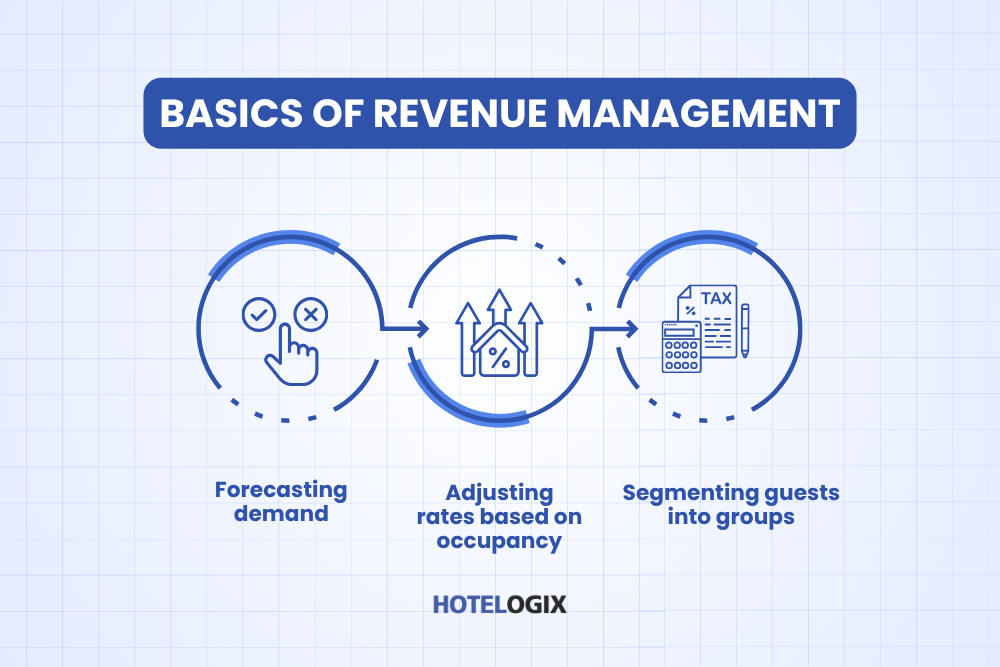
That’s why revenue management in hotels focuses on:
- Forecasting demand
- Adjusting rates based on occupancy
- Segmenting guests into groups
- Keeping fair and consistent pricing across channels
With these basics in place, small hotels can control revenue better and avoid last-minute guesswork.

Step 1: Forecast Demand
Forecasting is about predicting how many rooms will sell on a given day. Small hotels can do this with simple methods:
- Compare this year’s bookings with last year’s numbers.
- Track cancellations and new reservations daily.
- Keep an eye on competitor pricing.
- Follow the local calendar for festivals, weddings, exhibitions, or sports events.
Example: A 30-room hotel in Jaipur notices that every December, occupancy rises because of wedding season. Last year, the hotel reached 80% occupancy during the second week of December. This year, with similar bookings already coming in, the manager increases rates slightly from the first week, instead of waiting until the last minute.
Sample Forecasting Table
Forecasting is not about being 100% accurate. It is about preparing better and avoiding sudden surprises.
Step 2: Adjust Prices Daily (Dynamic Pricing)
Dynamic pricing means adjusting rates as demand changes. Instead of keeping the same price for months, rates should change based on availability and demand.
- Low occupancy: Lower rates slightly to encourage bookings.
- Medium occupancy: Keep rates steady and competitive.
- High occupancy (few rooms left): Increase rates, as scarcity raises value.
Example: A 20-room hotel near a hill station has only 3 rooms left for the weekend. By raising the rate for the last 3 rooms, the hotel earns more without affecting demand, since late-booking guests usually expect to pay higher.
Mistake to avoid: Dropping prices too much during low occupancy. Competitors may copy your rate cuts, leading to an overall price drop in the market.
Step 3: Know Your Guests (Market Segmentation)
Not all guests are the same. Some are very price-sensitive, while others are ready to pay more for comfort or convenience.
Segmentation allows you to adjust offers based on guest needs. For example, a family may book early and look for packages, while a business traveler may book at the last minute and pay more.
Step 4: Avoid Rate Disparity
Rate disparity means different prices on OTAs and your hotel website. This can hurt OTA ranking and confuse guests.
How to avoid it:
- Maintain similar rates across channels.
- Offer promo codes only on your website.
- Give extras (like free breakfast or Wi-Fi) for direct bookings.
- Build loyalty rates for repeat guests.
This way, OTAs remain satisfied, and your direct booking share increases.
Step 5: Follow Current Trends in 2026
Revenue management has changed a lot. Small hotels must adapt to new trends:
- AI-based pricing tools suggest rate changes automatically.
- Mobile-first booking engines attract smartphone users.
- Reputation management is critical, as reviews impact pricing.
- Eco-friendly hotels attract guests willing to pay more.
- Direct booking incentives reduce OTA commission losses.
Key KPIs Small Hotels Should Track
To manage revenue properly, small hotels should regularly check these numbers:
Example: A hotel with 20 rooms sold 10 rooms at ₹3,000 each.
- ADR = ₹3,000
- Occupancy = 50%
- RevPAR = ₹1,500
If occupancy rises to 80% while ADR remains strong, overall revenue improves.
Product Focus: How Hotelogix PMS Helps
Instead of manually changing prices, the system ensures your rates are always optimized.
Before Hotelogix:
- The manager checked the rates manually once a week.
- Prices stayed the same during weekdays and weekends.
- Occupancy fell in the low season, and profits dropped.
Before Hotelogix:
- The manager checked the rates manually once a week.
- Prices stayed the same during weekdays and weekends.
- Occupancy fell in the low season, and profits dropped.
After Hotelogix Dynamic Pricing:
- Rates updated daily as occupancy changed.
- Higher rates applied on weekends and event days.
- Revenue increased even with the same number of bookings.
For small hotels, Dynamic Pricing makes revenue management simple, consistent, and less time-consuming.
Quick Checklist for Hoteliers
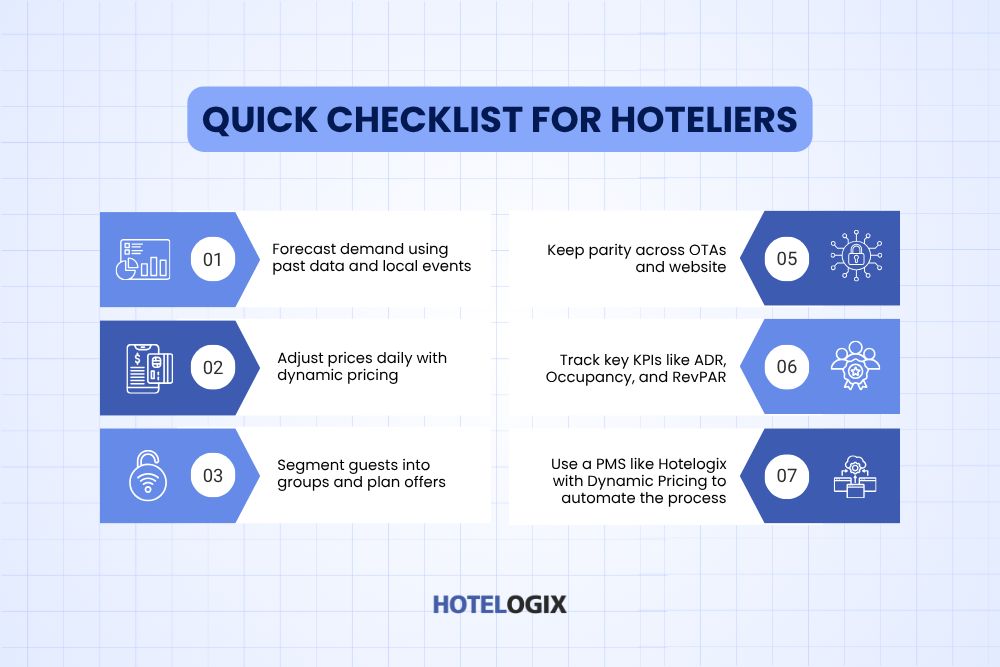
- Forecast demand using past data and local events
- Adjust prices daily with dynamic pricing
- Segment guests into groups and plan offers
- Keep parity across OTAs and website
- Track key KPIs like ADR, Occupancy, and RevPAR
- Use a PMS like Hotelogix with Dynamic Pricing to automate the process
Final Thoughts
Revenue management is no longer optional. For small hotels, where margins are thin, smart pricing decisions can make the difference between loss and profit.
By forecasting demand, adjusting rates daily, segmenting guests, and tracking KPIs, even independent hotels can run revenue management successfully.
With Hotelogix PMS, small hotels don’t need expensive systems or large teams. They can use Dynamic Pricing to keep rates competitive, improve occupancy, and maximize profits.
Revenue management is not about complexity. It is about consistent effort, supported by the right tools. For small hotels, this approach ensures growth and stability in a competitive market.