
Why the Right PMS Matters More Than Ever
If you run a hotel today, you know how complex things can get — juggling reservations, check-ins, OTA updates, housekeeping, and guest requests. Doing this manually or with outdated software leads to:
- Lost revenue from missed bookings or rate errors
- Unhappy guests due to slow service or overbookings
- Wasted staff hours on repetitive tasks
A modern hotel property management system (PMS) is no longer a “nice-to-have” — it’s the core of your operations. It automates daily tasks, centralizes reservations, and integrates with OTAs, channel manager, and your web booking engine to drive more direct bookings.
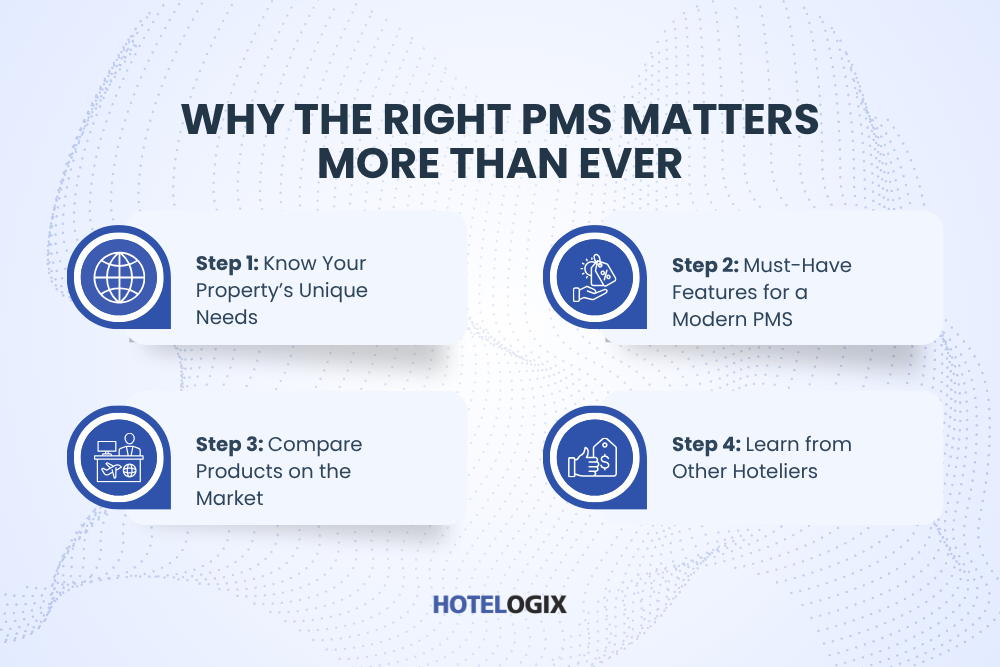
Step 1: Know Your Property’s Unique Needs
Before you start looking at demos, step back and understand what your hotel actually needs. This ensures you don’t overspend or choose the wrong system.
Pro Tip: Create a needs checklist with property size, guest profile, integrations, and budget. When you speak to PMS vendors, you’ll know exactly what you need and avoid paying for unnecessary add-ons.
Step 2: Must-Have Features for a Modern PMS
Here are the non-negotiable features every hotelier should look for in 2026:
Remember: A PMS that integrates with a revenue management system allows you to set dynamic pricing and optimize room rates — essential for improving ADR and profitability.
Step 3: Compare Products on the Market
Once you know what you need, compare PMS providers side by side.
Tip for Hoteliers: A 50-room hotel might not need the complexity (or cost) of Oracle OPERA. A cloud-based PMS like Hotelogix offers enterprise-grade features without the heavy IT investment.
Step 4: Learn from Other Hoteliers
Reading product brochures is one thing — hearing from other hoteliers is another.
- Talk to peers: Ask hotels of similar size what PMS they use
- Read case studies: Many vendors share success stories showing occupancy gains or OTA dependency reductions
- Check support ratings: Good PMS support is critical during high-season rush
Questions to Ask:
- Was onboarding smooth and staff training easy?
- Did the PMS help increase direct bookings?
- How responsive is support during weekends or late nights?
- Did it reduce manual work at the front desk or in housekeeping?
Trends You Can’t Ignore in 2026
The hospitality tech landscape is evolving fast. Look for a PMS that is future-ready:
- Mobile-First Operations: Update rates and view reports anytime, anywhere
- Contactless Guest Journeys: Digital check-in/out, mobile keys, QR-based menus
- AI-Driven Forecasting: Rate suggestions and occupancy predictions based on demand
- Open API Architecture: Easy to connect with future tools and integrations
Product Spotlight: Why Hotelogix PMS Stands Out
The platform also improves guest experience through its guest services app, which lets guests request housekeeping, order in-room dining, or book transport directly from their phones. Its reporting and analytics go beyond numbers — ADR shows how much you’re earning per sold room (ideal for spotting underpriced categories), RevPAR reveals overall room revenue performance, and occupancy reports help you identify slow days or peak demand periods. These insights let you adjust rates quickly, plan promotions, and capture more revenue from every available room.
Frequently Asked Questions (FAQ)
Q1-Will switching to a new PMS disrupt my operations?
A- No. Most modern PMS providers offer guided onboarding, staff training, and data migration support. The transition typically takes just a few hours, minimizing disruption.
Q2-How can a PMS help me increase revenue?
A-Features like real-time OTA management, dynamic pricing via revenue management system integration, and a direct web booking engine can help maximize occupancy and boost room revenue.
Q3-Is a PMS cost-effective for small hotels?
A-Yes. Cloud-based PMS solutions are priced per room/month and scale with your property, making them affordable even for 20-room hotels.
Q4-What support should I expect after purchase?
A-Look for 24/7 live chat or phone support, a self-service knowledge base, and regular feature updates to keep your system modern and reliable.
Conclusion
Choosing the right PMS is one of the most impactful decisions you’ll make as a hotelier. By clearly understanding your property’s needs, prioritizing must-have features, and comparing providers carefully, you can select a solution that saves time, enhances guest experience, and improves your bottom line.
The right PMS means you spend less time managing systems and more time focusing on what matters most: delighting guests and growing your business.